Friday, May 04, 2007
Bottled water trumps milk, nears beer
This is a interesting report!!
It show that American need to understand the health issue & stability of Oxygen in bottled water & other repated issue.
@@@@@@@@@@@@@@@@@@@@@@@@@@@@@@@@@@@@@@@@@@@@@@@@@@@@W
Bottled water trumps milk, nears beer
By DUANE D. STANFORD
The Atlanta Journal-Constitution
Published on: 05/04/07
Twenty years ago, people scoffed at the notion that highfalutin bottled water made by companies like Perrier and Crystal Springs would ever catch on with the masses. Why would people pay for something they could get at the kitchen sink for next to nothing, the doubters asked?
Boy were they wrong. For the first time ever, Americans on average drank more bottled water in 2006 than milk, according to an industry newsletter that tracks U.S. beverage sales.
And Americans drank nearly as much bottled water as beer.
If the trend continues, Americans could be drinking more bottled water than tap water within a few years.
John Sicher, publisher of industry newsletter Beverage Digest, which tabulated the consumption figures, said portability and health are the key reasons for bottled water's popularity.
"Tap water is in trouble," he quipped.
Beverage Digest's figures showed average per capita consumption of bottled water grew from 11 to 21 gallons between 1996 and 2006.
Consumption of milk dropped from 22.7 to 19.5 gallons over the 10-year span, while beer consumption was steady at 21.8.
Soft drink consumption dropped from 52 to 50.9 gallons, according to the figures.

Monday, April 02, 2007
Saturday, January 27, 2007

Friday, December 08, 2006

Tuesday, November 21, 2006
Tuesday, August 22, 2006
Straight down Hoover Dam USA
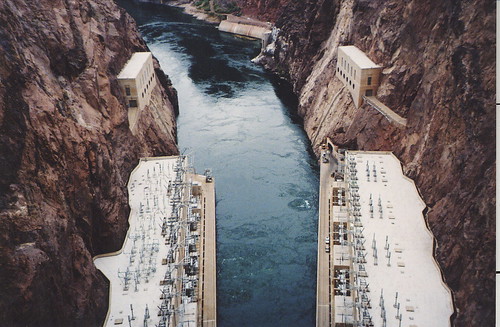
Hover dam is one of the major dam that supplying drinking water to Southern California. The water level is decreasing each year.
This have pose a major concern about the supply of water in the future, due to global warmming.
We need to speed up the action to reverse the situation.
Friday, August 18, 2006
Friday, May 19, 2006
The Demise of Glacier

It had been reported in many reports that Glacier in North & South Artics are melting sooner ever.
As the pollutions in the air caused the Green house warming , thus the pollutions of the rain & eventually on our drinking water.
These is a major concern on our health & our future.
Thursday, May 11, 2006
Kangding. Zheduo River

For about over 5,000 years. This river have been a life live of Sichuan people.
They wash, they clean, they drink, they cook, they play with the water. Also transporting goods & food.
But now, I am no confidents on the quality of the water here & its branches.
With the industrialization taking place & the melting of Himalaya ice cap. It is a concern & a very serious concern.
Friday, May 05, 2006
Everest weather's ups and downs
The following news about Everest Weather 's is really a major concern on the green house effect. As my own research the climate change would not only affect the mountain region, but also the rain falls water in China; South East Asia India.
Which are the most populated area in world.
Everest weather's ups and downs
By Navin Singh Khadka;BBC News, in Nepal
Already experiencing melting glaciers and a receding snowline, the
Everest region of Nepal has seen some unusual weather patterns these
past few months.
It has given locals further cause to examine the changing face of this unique environment.
A snow-free winter, followed by unexpected snow storms in the second
week of March - when spring had already begun - has left Sherpas
baffled.
Story from BBC NEWS:
http://news.bbc.co.uk/go/pr/fr/-/2/hi/science/nature/4954546.stm
Published: 2006/05/05 11:26:25 GMT
Which are the most populated area in world.
Everest weather's ups and downs
By Navin Singh Khadka;BBC News, in Nepal
Already experiencing melting glaciers and a receding snowline, the
Everest region of Nepal has seen some unusual weather patterns these
past few months.
It has given locals further cause to examine the changing face of this unique environment.
A snow-free winter, followed by unexpected snow storms in the second
week of March - when spring had already begun - has left Sherpas
baffled.
Another unexpected storm in April, which lasted three
days, surprised the locals further still. The following morning, on 21
April, debris from a major ice collapse killed three Sherpa climbers
and injured more than a dozen others in the Khumbu Ice Fall area.
Such accidents are not uncommon in mountaineering, but
this one was blamed on the unusual snowfall which was believed to have
caused the collapse of the ice mass.
"We don't remember getting such snowfall during spring
in the past," said Manmohan Singh Chhetri of Asian Trekking, which had
employed the Sherpa climbers.
"This accident had much to do with the sudden change in
the weather patterns in the Everest region. Perhaps this is what global
warming is all about."
Caught unaware
They say heavy snowfall in spring is something they are
not used to. Moreover, the snowstorms occurred after a completely dry
winter period, lasting from November to February.
"Last winter was not at all like winter, and now the
same is the case with spring," said Jangbu Sherpa, an 80-year-old
Sherpa from mountain town Namche, which is en route to the Everest base
camp.
"This is something we've never seen before. We think this is quite ominous."
In the last two months, many trekkers have been caught unprepared by
the unexpected snowfall, forcing some to return while keeping others
indoors.
"The guidebooks I referred to did not have any
information about snowfall in this season," said Sarah Topping, a
trekker from London, after she braved a sudden snowfall around Namche
last month.
The locals are just as surprised. "I have taken all my
jackets out of the wardrobes again, even though I had put them away
last February," said Nawang Sherpa, a lodge owner in Namche.
For locals dependent on farming, the unusual snowfall in spring brought relief.
"We were quite frustrated because the wintry months were dry and we
could not grow anything," said Sarki Maya Tamang, a farmer in Lukla,
the gateway to the Everest region.
"Now that it has snowed, the fields have become wet and we can sow barley."
Conservation organisations such as WWF have also taken note of the unusual weather patterns.
"We have noticed the unusual and unexpected snowfall in spring," WWF's
climate change officer, Sandeep Chamling Rai, said. "We have been
receiving complaints from locals about the changing weather pattern."
Rangers in the Sagarmatha National Park echo the same
message: "All we can say at this point is climate change is happening
the world over and the Everest region cannot be an exception," said a
spokesperson.
New investigations
This region has now become the subject of intensive study, to get some
concrete data rather than just people's perceptions of changing
climate.
EV-K2-CNR, an international organisation with
headquarters in Italy, has recently installed a sunphotometer at an
altitude of 5,079m (16,600ft) near Mount Everest. It will monitor
atmospheric aerosols, "brown clouds" and changes in humidity in the
Himalayas.
"Atmospheric aerosols are 'powders' that can prevent
sunlight from reaching the Earth's surface, and they can also warm the
air layer. They have impacts in both regional and global climate,"
explained a spokesperson from EV-K2-CNR. "They can lead to changes in
temperature and rainfall patterns."
While the findings of the sunphotometer are awaited, Nepal's Department of Hydrology and Meteorology says it has an
explanation as to why it did not snow at all in most of the Nepalese
Himalayas last winter.
"The information we have is that the westerly
disturbances that normally arrive in the atmosphere of Nepal during
winter did not happen this time due to atmospheric pressure reasons,"
said Sarju Baidya, senior divisional meteorologist at the department.
"The westerly disturbances this time went to Tibet
without entering Nepal's atmosphere, and that was the reason why there
was no rain throughout Nepal last winter and there was no snow in the
mountain region."
Technocrats like Baidya may have the answer for the dry
winter but they do not, as yet, have an explanation for the unusually
snowy spring the Everest region has witnessed this time.
Story from BBC NEWS:
http://news.bbc.co.uk/go/pr/fr/-/2/hi/science/nature/4954546.stm
Published: 2006/05/05 11:26:25 GMT
Tuesday, May 02, 2006
Monday, May 01, 2006
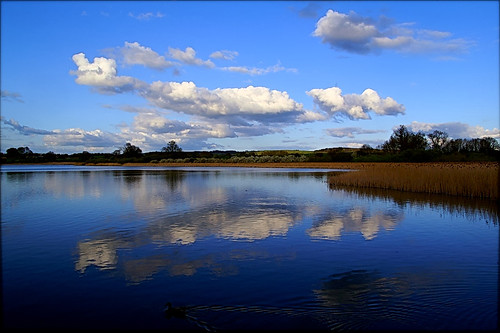
Bláa lónið 3

Sometime last year, I read a report that the contamination in artic circle are very severe i.e. Alaska, Green land, Iceland...
Looking at this view, we unable to know the conytamination level in the water.
We need to work in hand to create more awareness & call for action.
Friday, March 31, 2006
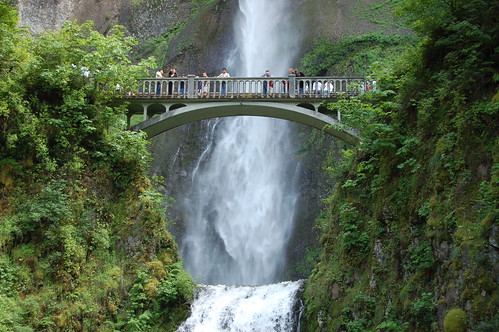
Beauty of Water Falls
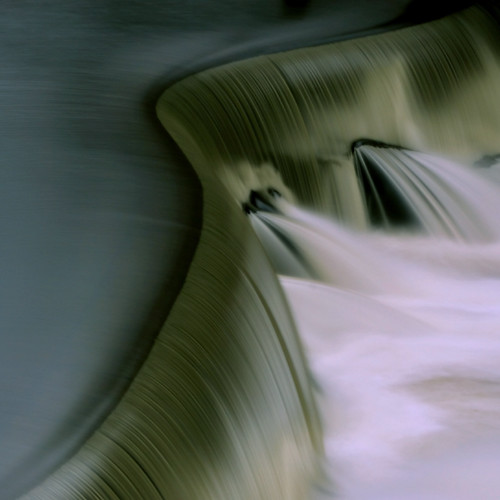
This beautiful falls will soon be over, if we don't act to reduce the CO2 in the air!!
Friday, March 24, 2006
Protect Our Environment
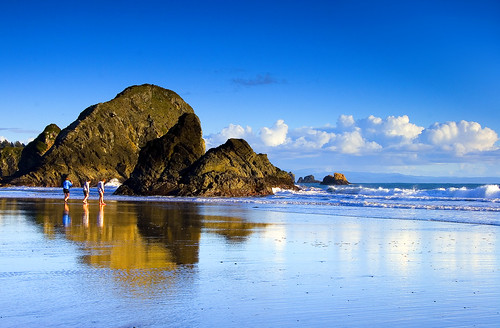
This nice blue sky; Blue water is great view & clean.
It is our duty to protect it & ensure our future generation do have the clean & blue environment to live!!
Wednesday, March 22, 2006
Sea

The pollution of the sea would cause our environment & d4rinking water to be polluted.
All of us need to do our part to prevent the pollution. Protect our health.
Thursday, March 09, 2006
Beauty of Nature

I hope you do enjoy this scene.
Can we ensure that our decendants would be able to have a clean & Green environment??
Wednesday, March 08, 2006
Tuesday, March 07, 2006
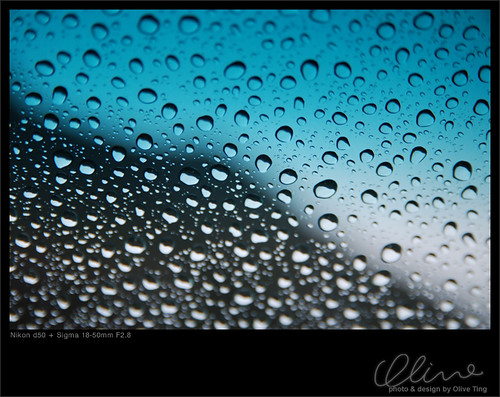
Drops
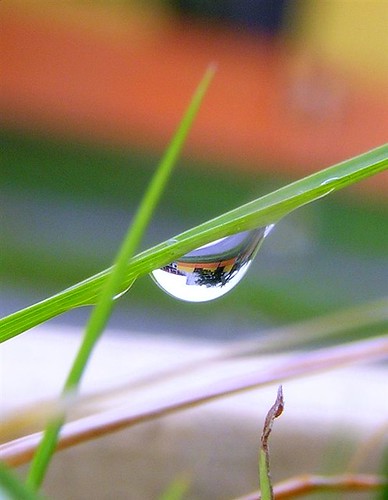
A Lake is created by every single rain drop for all these while & all these years.
Save Water is Save Lives!!
Wednesday, March 01, 2006
Sunset

Can you see the pollution in the air??
So that gives such a nice Sunset view??
How much smogs is in the air??
All the pollutions would fall back to ground & then polluted our ground water & drinking water supply.
Do our part before it is too late!!
Subscribe to:
Comments (Atom)

