
Looking at the water falls quality.
You see the nice green & blue.
But when I was last at the Nigara Falls, I found lots of oil stain floating on it surface.
We have to be concern on the water quality on earth, to all what we can to protect it & ensure that the water that we during, for growing of plants & vegetables & clean.
So that we can enjoy our longevity & great health!!
Sunday, November 13, 2005
Cleaningness of Water

Monday, October 31, 2005
Global Warming!!

Looking at this photos, I am sure the plants' are confuse with the wealther conditions now.
i.e. The satellite forecast is day teperature is 70 degree F, but it went up to 78degree, night temperature is 58 dagree, then it went down to 52 degree!!
Click on the photos to read more...
If we are not protecting our environment & water & air. We would be responsible for our own doing!!
Sunday, October 30, 2005
Clean Water

We need to consistently check our environment.
Cut less trees, plant more trees & green our landscape.
Otherwise, the beauty of our mother nature would be gone.
We would no longer be able to enjoy the scenary like these!!
Sunday, August 21, 2005
Powder Activated Carbon for Water Filtration

I found this poster on www.flickr.com.
It is a knowledge for you to know how the filtration processs work.
Sunday, August 14, 2005
Water Viaduct That is Century Old
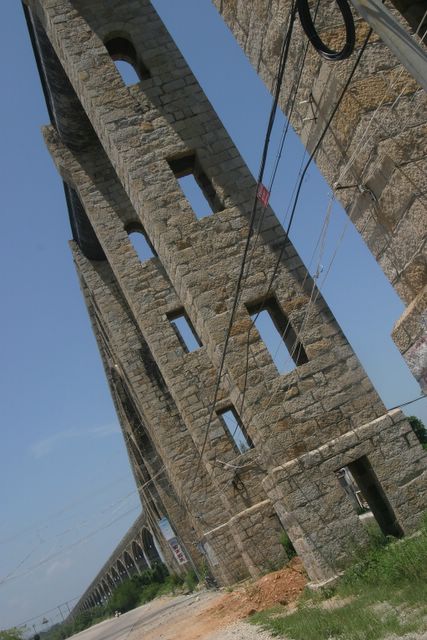
This is the Viaducts that ferry waters to my Late Parent's Home Town in Fujian; DongShan Island.
I am told that this is about century old. Supplying drinking water for 0.5millions people!!

Monday, May 16, 2005
West Palm To Study New Ways To Treat Water
Water Contaminations & pollutions is evermore critical now then ever.
It is important constantly to seek new ways & R & D on the subject matter, one cannot wait until the problem's surface then start to find a solutions to it. That would be too late.. lost a life's & money would happen.

West Palm to study new ways to treat water
By Thomas R. Collins
Palm Beach Post Staff Writer
Monday, May 16, 2005
WEST PALM BEACH — City residents turned on their faucets one Monday morning last month only to be slapped in the nose by foul-smelling water that tasted like dirt.
City utility officials say they're about to take a hard look at their water system to keep the wincing to a minimum when people pick up their glasses.
More local news
Latest breaking news, photos and all of today's Post stories.
• Sound off in the forum
• State/Legislature
• Columnists
• Crime, live scanners
• Photos
• Special reports
• Weather
• Traffic
• Obituaries
They'll have a lot to review.
Among the 40 largest cities in Florida in terms of population, West Palm Beach is one of only three that rely primarily on surface water — a source that most in the water industry agree is harder to treat and is subject to algae blooms, like the one that had bottled-water sales skyrocketing recently.
When the weather turns dry, the city turns to Lake Okeechobee, which is so polluted and unfit for providing drinking water that it is frequently described as "chocolate milk" full of phosphates and nitrogens that allow algae to flourish and release foul-tasting compounds. And it's getting worse all the time, making future algae blooms more likely.
Despite that, the city has not turned to more sophisticated ways of treating water that could remove the offensive stuff. At least 17 of the cities in the top 40 have done so, including the other two that rely on surface water: Tampa and Melbourne.
The city's study comes in the middle of a population explosion in which 15,000 more water drinkers have moved into West Palm Beach over the last four years.
Water experts say the promise of more frequent algae blooms is a problem West Palm Beach shouldn't ignore.
"Sometimes you encounter a situation beyond what you expected to have," said Michael Hambor, an operations supervisor with the Palm Beach County Health Department who oversees drinking-water quality. "Now they're going to have to go back and decide what do we do when these things happen."
"I think they have a lot of opportunities with their water treatment facility," said Randy Smith, spokesman for the South Florida Water Management District.
City utility officials promise to respond.
"If they have some alternative methods that would really help our customers, we will definitely budget them and build them," Public Utilities Director Ken Rearden said. "I don't want to deal with this every year."
Ever since railroad tycoon Henry Flagler started drawing rainwater from a low-lying area for his Royal Poinciana Hotel in 1894, the city has relied on surface water.
Today, 19 square miles of wetlands west of Florida's Turnpike store rainwater for drinking. The quality of that water is superior to other surface sources, such as the Hillsborough River, which Tampa uses.
The city is trying to decrease its reliance on Lake Okeechobee during dry periods. It has tested a program in which water is stored in underground wells, though an expansion of that system has stalled because of electricity problems.
The city also is planning to open a plant that treats waste water and returns it to the drinking water supply, but that has been delayed because of problems with the contractor, utility officials said.
"Our mission is to stop reliance on Lake Okeechobee because of the water quality," Rearden said.
The city's plant has won awards and West Palm Beach once won an award for best-tasting water in the region, though that was so many years ago few can remember when it was.
Still, a recent algae bloom, prompted by a hurricane-churned Lake Okeechobee, threw the city for a loop. Utility officials, who use powdered carbon to treat the compounds, simply added more. But they were adding it to the wrong place at first, and had to fix it. They eventually received emergency permission to tap into an underground well of cleaner water to dilute the city's water. Since then, they've upped the amount of chlorine in the water for better disinfection.
Palm Beach County objected to the city's use of the well, worrying it might hurt the quality of the county's water sources nearby.
The city has painted itself into a corner on the algae problem, said Bevin Beaudet, the county's utilities director and past president of the American Water Works Association.
"They're not really looking for a longer-term solution," he said. "It would be presumptuous to say I know how to solve their problems. But if they worked on it they could do that."
More and more cities are turning to methods of treating water that are more sophisticated than West Palm Beach's chemical-treatment method. One is the use of synthetic membranes through which water passes.
Others use ozone, which mixes with the water and changes the molecular makeup of the impure material to render it odorless and tasteless.
The county began using membrane and ozone treatment in the 1990s, in part to eliminate taste and odor problems caused by sulfur, a common problem with underground water.
"The studies showed that the ozone greatly improved the taste and odor of the water and also helped us meet the future regulations," Beaudet said. Moving to ozone also would eliminate the need for chlorine and the waste product associated with it, he noted. Boca Raton and Boynton Beach have turned to membranes.
Rearden said the city will consider all methods, but said going to ozone would be expensive.
"Can you think about what the water rates would be for that?" he said.
Beaudet said the county's rates rose 10 percent or 15 percent over five years when the upgrades were made.
The Orlando Utilities Commission raised rates 10 percent for four straight years in the late 1990s to pay for its switch to ozone.
Others in the industry said newer isn't necessarily better.
WestPalmBeachPost
It is important constantly to seek new ways & R & D on the subject matter, one cannot wait until the problem's surface then start to find a solutions to it. That would be too late.. lost a life's & money would happen.
West Palm to study new ways to treat water
By Thomas R. Collins
Palm Beach Post Staff Writer
Monday, May 16, 2005
WEST PALM BEACH — City residents turned on their faucets one Monday morning last month only to be slapped in the nose by foul-smelling water that tasted like dirt.
City utility officials say they're about to take a hard look at their water system to keep the wincing to a minimum when people pick up their glasses.
More local news
Latest breaking news, photos and all of today's Post stories.
• Sound off in the forum
• State/Legislature
• Columnists
• Crime, live scanners
• Photos
• Special reports
• Weather
• Traffic
• Obituaries
They'll have a lot to review.
Among the 40 largest cities in Florida in terms of population, West Palm Beach is one of only three that rely primarily on surface water — a source that most in the water industry agree is harder to treat and is subject to algae blooms, like the one that had bottled-water sales skyrocketing recently.
When the weather turns dry, the city turns to Lake Okeechobee, which is so polluted and unfit for providing drinking water that it is frequently described as "chocolate milk" full of phosphates and nitrogens that allow algae to flourish and release foul-tasting compounds. And it's getting worse all the time, making future algae blooms more likely.
Despite that, the city has not turned to more sophisticated ways of treating water that could remove the offensive stuff. At least 17 of the cities in the top 40 have done so, including the other two that rely on surface water: Tampa and Melbourne.
The city's study comes in the middle of a population explosion in which 15,000 more water drinkers have moved into West Palm Beach over the last four years.
Water experts say the promise of more frequent algae blooms is a problem West Palm Beach shouldn't ignore.
"Sometimes you encounter a situation beyond what you expected to have," said Michael Hambor, an operations supervisor with the Palm Beach County Health Department who oversees drinking-water quality. "Now they're going to have to go back and decide what do we do when these things happen."
"I think they have a lot of opportunities with their water treatment facility," said Randy Smith, spokesman for the South Florida Water Management District.
City utility officials promise to respond.
"If they have some alternative methods that would really help our customers, we will definitely budget them and build them," Public Utilities Director Ken Rearden said. "I don't want to deal with this every year."
Ever since railroad tycoon Henry Flagler started drawing rainwater from a low-lying area for his Royal Poinciana Hotel in 1894, the city has relied on surface water.
Today, 19 square miles of wetlands west of Florida's Turnpike store rainwater for drinking. The quality of that water is superior to other surface sources, such as the Hillsborough River, which Tampa uses.
The city is trying to decrease its reliance on Lake Okeechobee during dry periods. It has tested a program in which water is stored in underground wells, though an expansion of that system has stalled because of electricity problems.
The city also is planning to open a plant that treats waste water and returns it to the drinking water supply, but that has been delayed because of problems with the contractor, utility officials said.
"Our mission is to stop reliance on Lake Okeechobee because of the water quality," Rearden said.
The city's plant has won awards and West Palm Beach once won an award for best-tasting water in the region, though that was so many years ago few can remember when it was.
Still, a recent algae bloom, prompted by a hurricane-churned Lake Okeechobee, threw the city for a loop. Utility officials, who use powdered carbon to treat the compounds, simply added more. But they were adding it to the wrong place at first, and had to fix it. They eventually received emergency permission to tap into an underground well of cleaner water to dilute the city's water. Since then, they've upped the amount of chlorine in the water for better disinfection.
Palm Beach County objected to the city's use of the well, worrying it might hurt the quality of the county's water sources nearby.
The city has painted itself into a corner on the algae problem, said Bevin Beaudet, the county's utilities director and past president of the American Water Works Association.
"They're not really looking for a longer-term solution," he said. "It would be presumptuous to say I know how to solve their problems. But if they worked on it they could do that."
More and more cities are turning to methods of treating water that are more sophisticated than West Palm Beach's chemical-treatment method. One is the use of synthetic membranes through which water passes.
Others use ozone, which mixes with the water and changes the molecular makeup of the impure material to render it odorless and tasteless.
The county began using membrane and ozone treatment in the 1990s, in part to eliminate taste and odor problems caused by sulfur, a common problem with underground water.
"The studies showed that the ozone greatly improved the taste and odor of the water and also helped us meet the future regulations," Beaudet said. Moving to ozone also would eliminate the need for chlorine and the waste product associated with it, he noted. Boca Raton and Boynton Beach have turned to membranes.
Rearden said the city will consider all methods, but said going to ozone would be expensive.
"Can you think about what the water rates would be for that?" he said.
Beaudet said the county's rates rose 10 percent or 15 percent over five years when the upgrades were made.
The Orlando Utilities Commission raised rates 10 percent for four straight years in the late 1990s to pay for its switch to ozone.
Others in the industry said newer isn't necessarily better.
WestPalmBeachPost
Friday, May 06, 2005
Character of Water

The Character of Water Are
As Serene as the Widow Tree
As Smooth as the skill
As Power as the Avalonche Force
With these characters then it is affecting our health......
Tuesday, April 26, 2005
Slice of Lemon In Water for Great Health

Do You Know Put A Slice of Lemon In Your Glass Of Water is Great for Your Health??

Thursday, April 14, 2005
Water for Great Health of Live

Like The PLant's..Flower's...Animal's..
We Human too.. Need Clean Water..
Free From Pollutions
Free From Contaminations
For The Great Health of Us, All Life On The Mother Earth.
Do a little each
Second
Minute
Hour
Each Day &
Everyday...
To Protect our Environment & for Our Great Health!!
Tuesday, April 12, 2005
Clean Water To Bring Back Life
Looking at this picture, it take me Back to the late 50's & Early 60's, my home have two fish ponds the water is clean & clear.
There are always difference types of tropical fishs in the ponds.
Then after when the area become more populated. 1st it was the snakes.. then the fsih is allgone within half a year.
You see the industrailizations have kills life's.
We Baby bloomers' would have to clean these up for our love ones!!
Green The World.

There are always difference types of tropical fishs in the ponds.
Then after when the area become more populated. 1st it was the snakes.. then the fsih is allgone within half a year.
You see the industrailizations have kills life's.
We Baby bloomers' would have to clean these up for our love ones!!
Green The World.
Monday, April 11, 2005
Tulips With Rainbow Color
Our Mother Earth
Before Industrialization is Nature Green & Colorful.
Like Our Body, The Mother Earth is Containing 75% of Water.
Today, Our Enironment are polluted, Water Contaminated, Once Our Water Resource Dry Out.
Imaging these beatiful scene can only see in Our Digital Archives.
It Would Be A sad Future for Our Heirs.
Do Something Now to Protect Our Mother Earth!!

Before Industrialization is Nature Green & Colorful.
Like Our Body, The Mother Earth is Containing 75% of Water.
Today, Our Enironment are polluted, Water Contaminated, Once Our Water Resource Dry Out.
Imaging these beatiful scene can only see in Our Digital Archives.
It Would Be A sad Future for Our Heirs.
Do Something Now to Protect Our Mother Earth!!
Clean Water Need More Green
Looking At The Beauty of Clean Water.
Is Clean & Clear!!
More Trees Have Been Cut, Mean More Pollutions;
Less Oxygen!!
We need More Trees & Green Plants To Do The Organic Filtering;
Also, More Oxygen Means More Water!!
Better Health for US All!!

Is Clean & Clear!!
More Trees Have Been Cut, Mean More Pollutions;
Less Oxygen!!
We need More Trees & Green Plants To Do The Organic Filtering;
Also, More Oxygen Means More Water!!
Better Health for US All!!
Saturday, April 09, 2005

Friday, April 08, 2005
Keeping the Peace: Spill Capture at Niagara Falls
In 1996, when i was at the New York for conference, I took time off to visit Niagara fall.
Then It was the first time in my life that I see myself the historical landmark of nature. I did took a trip to the horseshoe fall. The views are spectacular.
I also have a close look of the cleaningness of the water ther. My impression is that the water is contaminated as I see the water is no blue or green , it is grey!!
I can understand the reason why it is grey!! As the tour barges are propelled by diesel. Overtime, there are leakage from the barges to the falls. These not only happen in Niagara Falls, it also happen in Lake Tahoe, when I last visit in 2002.
Eventhough the case study is done & spill are quickly clean of, the complete evaluations must be done & objectives must be agree to clean up the pollutions of the Niagara Fall.
Case Study: Keeping the Peace: Spill Capture at Niagara Falls
4/6/2005
The Peace Bridge Authority of Buffalo, New York and Fort Erie, Ontario completed re-construction of a Canadian truck processing yard at this busy international border crossing. The new construction called for a storm water management system to prevent environmental damage from commercial motor vehicle leaks and spills that frequently occur in such a high traffic area.
This area has a particularly fragile ecological system which include the famous Niagara Falls tourist and recreation area. Fortunately, the re-construction engineering plans specified two Stormceptor units.
On August 19, 1997, a tanker truck transiting the border was sent into Canada Customs for secondary inspection. The area for inspection is a congested holding lot in constant use. The truck suddenly developed a tank leak while in the lot. The leak was quickly cut off, but not before 400 gallons of palm oil spilled into the storm sewer system.
The two Stormceptor units trapped the oil and completely contained the spill, keeping it out of the eco-system. The storm water management system included sluice gates as a secondary containment, but the Stormceptor units fully handled the situation, and the sluice gates were not employed.
The construction superintended for the Peace Bridge Authority reported, "The spill was quickly cleaned up, including the maintenance of the two Stormceptor units (via vacuum truck).
To say the least, we are pleased at the ease of clean up and quick return to normal operation, with no damage to the environment.
Water Online News for wastewater professionals
Then It was the first time in my life that I see myself the historical landmark of nature. I did took a trip to the horseshoe fall. The views are spectacular.
I also have a close look of the cleaningness of the water ther. My impression is that the water is contaminated as I see the water is no blue or green , it is grey!!
I can understand the reason why it is grey!! As the tour barges are propelled by diesel. Overtime, there are leakage from the barges to the falls. These not only happen in Niagara Falls, it also happen in Lake Tahoe, when I last visit in 2002.
Eventhough the case study is done & spill are quickly clean of, the complete evaluations must be done & objectives must be agree to clean up the pollutions of the Niagara Fall.
Case Study: Keeping the Peace: Spill Capture at Niagara Falls
4/6/2005
The Peace Bridge Authority of Buffalo, New York and Fort Erie, Ontario completed re-construction of a Canadian truck processing yard at this busy international border crossing. The new construction called for a storm water management system to prevent environmental damage from commercial motor vehicle leaks and spills that frequently occur in such a high traffic area.
This area has a particularly fragile ecological system which include the famous Niagara Falls tourist and recreation area. Fortunately, the re-construction engineering plans specified two Stormceptor units.
On August 19, 1997, a tanker truck transiting the border was sent into Canada Customs for secondary inspection. The area for inspection is a congested holding lot in constant use. The truck suddenly developed a tank leak while in the lot. The leak was quickly cut off, but not before 400 gallons of palm oil spilled into the storm sewer system.
The two Stormceptor units trapped the oil and completely contained the spill, keeping it out of the eco-system. The storm water management system included sluice gates as a secondary containment, but the Stormceptor units fully handled the situation, and the sluice gates were not employed.
The construction superintended for the Peace Bridge Authority reported, "The spill was quickly cleaned up, including the maintenance of the two Stormceptor units (via vacuum truck).
To say the least, we are pleased at the ease of clean up and quick return to normal operation, with no damage to the environment.
Water Online News for wastewater professionals
Saturday, April 02, 2005
Google Gulp -- SERO TONIC WATER
Do You Know
Think refreshing!!!!!.

Have Got into Business of Water for Great Health??
This is their Label

Here is how it look like.

Sero-Tonic Water – Just try to stay down once your synapses get a blast of this bubbly concoction whose refreshing blend of selective serotonin reuptake inhibitors is perfect for those moments when all your other beverage options just seem soooo depressing.
Think refreshing!!!!!.
Have Got into Business of Water for Great Health??
This is their Label
Here is how it look like.
Sero-Tonic Water – Just try to stay down once your synapses get a blast of this bubbly concoction whose refreshing blend of selective serotonin reuptake inhibitors is perfect for those moments when all your other beverage options just seem soooo depressing.
Friday, April 01, 2005
Ships No Longer Allowed to Dump Ballast -- My Recommendation; Use Alternative Energy
Yes, stop the Dumping of Ballast is a significant effort.
However, the Marines life mirgrations more then often is not what one can control. As the marine life may have caught into the shell or those structure of their ship body.
The roots of the pollution on the sea mainly due to the diesel spills or leads. I my opinion, We must take the lead to go for the clean energy on all ship within the next 5-15 years. I have been researching into these issues since I was 20th years old.. each time the ship called into dock or the port, I saw the amount of waste & those pollutions or containminations.. such as human waste, scales, paints, rusts...etc., have been dump into the sea, be it intensionally or un-intentionally.
The only way out is to convert the ship engine to the Alternative Energy. Such as Hydrogen; Solar; Wind; even Fuel Cells should be considered.
Ships No Longer Allowed to Dump Ballast
By TERENCE CHEA Associated Press Writer
SAN FRANCISCO A federal judge ruled Thursday the government can no longer allow ships to dump without a permit any ballast water containing nonnative species that could harm local ecosystems.
U.S. District Judge Susan Illston ordered the Environmental Protection Agency to immediately repeal regulations exempting ship operators from having to obtain such permits.
"This is a slam dunk for healthy oceans," said Sarah Newkirk, clean water advocate for the Washington, D.C.-based Ocean Conservancy. "The court decision will prevent a vast amount of pollutants from the shipping industry from entering U.S. waters."
EPA officials did not immediately return calls seeking comment.
In 1999, the Ocean Conservancy and four other environmental groups petitioned the EPA to repeal the ballast-water exemption. They claimed the Clean Water Act prohibits the discharge of pollutants, including biological materials - such as invasive species - into U.S. waters without a permit.
When the EPA denied the petition, the conservation groups filed a lawsuit in federal court in San Francisco in 2003.
Invasive species are known to cause significant economic and environmental damage. Marine species such as mollusks often are inadvertently transported in the ballast water of ships and discharged at ports far from their origins.
The bay's two most destructive species that originated in ballast water are Chinese mitten crabs, which clog irrigation and drinking water pipes, and Asian clams, which consume large amounts of plankton at the expense of other marine species.
Invasive species in San Francisco Bay cause more than $40 million in economic damage each year, Newkirk said.
Printer Friendly Version
However, the Marines life mirgrations more then often is not what one can control. As the marine life may have caught into the shell or those structure of their ship body.
The roots of the pollution on the sea mainly due to the diesel spills or leads. I my opinion, We must take the lead to go for the clean energy on all ship within the next 5-15 years. I have been researching into these issues since I was 20th years old.. each time the ship called into dock or the port, I saw the amount of waste & those pollutions or containminations.. such as human waste, scales, paints, rusts...etc., have been dump into the sea, be it intensionally or un-intentionally.
The only way out is to convert the ship engine to the Alternative Energy. Such as Hydrogen; Solar; Wind; even Fuel Cells should be considered.
Ships No Longer Allowed to Dump Ballast
By TERENCE CHEA Associated Press Writer
SAN FRANCISCO A federal judge ruled Thursday the government can no longer allow ships to dump without a permit any ballast water containing nonnative species that could harm local ecosystems.
U.S. District Judge Susan Illston ordered the Environmental Protection Agency to immediately repeal regulations exempting ship operators from having to obtain such permits.
"This is a slam dunk for healthy oceans," said Sarah Newkirk, clean water advocate for the Washington, D.C.-based Ocean Conservancy. "The court decision will prevent a vast amount of pollutants from the shipping industry from entering U.S. waters."
EPA officials did not immediately return calls seeking comment.
In 1999, the Ocean Conservancy and four other environmental groups petitioned the EPA to repeal the ballast-water exemption. They claimed the Clean Water Act prohibits the discharge of pollutants, including biological materials - such as invasive species - into U.S. waters without a permit.
When the EPA denied the petition, the conservation groups filed a lawsuit in federal court in San Francisco in 2003.
Invasive species are known to cause significant economic and environmental damage. Marine species such as mollusks often are inadvertently transported in the ballast water of ships and discharged at ports far from their origins.
The bay's two most destructive species that originated in ballast water are Chinese mitten crabs, which clog irrigation and drinking water pipes, and Asian clams, which consume large amounts of plankton at the expense of other marine species.
Invasive species in San Francisco Bay cause more than $40 million in economic damage each year, Newkirk said.
Printer Friendly Version
Wednesday, March 30, 2005
All Dried Up: How Clean Water is Threatened by Budget Cuts
Yesterday, the Blogger have some problem, I am unable to post articles.. I attempted to post this article 5 times but I failed. I have submit my report to the support@ blogger.com. However, I have not have any reply yet. I hope this time it works.
I have posted an article on the Clean Water Budget cut issue some few weeks back.
According to the Sierra Club:


The Cut of $500million, or 37% of funding would affect the Water Quality information & effects of Jobs.
My additonal comment is that the Health issues that our people in this country would be at a very significant Risk!!
The following is the link to the PDF version of the Full report
All Dried Up
All Dried Up: How Clean Water is Threatened by Budget Cuts
A large coalition of state and local governments, labor, construction, public health and environmental groups released a new study highlighting the effects of cuts in clean water funding the Bush administration has proposed.
Overall, the Bush administration recommended a cut of $500 million, or 37 percent, in funding to help communities construct sewage treatment systems.
"All Dried Up: How Clean Water is Threatened by Budget Cuts" provides state-specific information on the effects of these cuts, water quality information, and effects on jobs.
Clean Water - Sierra Club
I have posted an article on the Clean Water Budget cut issue some few weeks back.
According to the Sierra Club:
The Cut of $500million, or 37% of funding would affect the Water Quality information & effects of Jobs.
My additonal comment is that the Health issues that our people in this country would be at a very significant Risk!!
The following is the link to the PDF version of the Full report
All Dried Up
All Dried Up: How Clean Water is Threatened by Budget Cuts
A large coalition of state and local governments, labor, construction, public health and environmental groups released a new study highlighting the effects of cuts in clean water funding the Bush administration has proposed.
Overall, the Bush administration recommended a cut of $500 million, or 37 percent, in funding to help communities construct sewage treatment systems.
"All Dried Up: How Clean Water is Threatened by Budget Cuts" provides state-specific information on the effects of these cuts, water quality information, and effects on jobs.
Clean Water - Sierra Club
Sunday, March 27, 2005
Rain brings water to reservoir
You see the Green House effects have cause the Himalaya & Alps Ice cap to melt.. then the Tsuname.
Now looking at the United State here, the Green house effects have bought lots of snow & rain both in the East & the West of America.
Thailand have been having water drought very often. Although Thailand have been fronting sea but the inner country counties are of mountain terrain.
The water is importants to Thai farmer's as well , they depend on the water to produce the Rice to feed most of the Asia people. Even in USA & Cananda, the Asian be it Vietnamese, Thais, Singapore, Malaysian.. Hong Kong..Indonesian , they all like the Thai Jasmin rice.
So the water issue is not only the concern of the Thai people is the concern of the people of these connected world.
Rain brings water to reservoir
PRASIT TANGPRASERT
Nakhon Ratchasima _ Artificial rain has increased the water level in Lam Takhong reservoir in Sikhiu district by 300,000 cubic metres, but several areas in the province are still in dire need of water for both home and agricultural use.
Recent cloud-seeding operations bore fruit in the Northeast, particularly Nakhon Ratchasima, where artificial rain covered several target areas and increased the water level in Lam Takhong, a major reservoir in the province.
Nakhon Ratchasima governor Pongpayom Vasaphut said this year's drought was severe, with over 200 villages in 26 districts and six sub-districts being affected. More than 350 million litres of water had already been distributed to drought-hit areas.
Justice Minister Suwat Liptapanlop, Second Army Region commander Lt-Gen Hern Wanprasert and Mr Pongpayom yesterday jointly presided over a ceremony to release 40 water trucks each carrying 10,000-20,000 litres of water to most affected villages in Kham Thale So, Non Thai, Chakkarat, Non Sung and Chakkarat districts.
Mr Suwat said he would push the cabinet tomorrow to speed up disbursement of a 600-million-baht budget for the Department of Agricultural Extension to alleviate the hardship of affected farmers.
Mr Pongpayom said about 30-35% of agricultural areas in the province had been damaged by the drought. He has sought 607 million baht from the Agriculture Ministry to pay compensation to affected farmers.
So far 87 million baht of the governor's budget and another 124 million baht of the provincial administration organisation's budget have been spent to ease water shortage in the province.
The Second Army Region has set up 11 relief centres to distribute water.
Bangkok Post Monday 28 March 2005 - Rain brings water to reservoir
Now looking at the United State here, the Green house effects have bought lots of snow & rain both in the East & the West of America.
Thailand have been having water drought very often. Although Thailand have been fronting sea but the inner country counties are of mountain terrain.
The water is importants to Thai farmer's as well , they depend on the water to produce the Rice to feed most of the Asia people. Even in USA & Cananda, the Asian be it Vietnamese, Thais, Singapore, Malaysian.. Hong Kong..Indonesian , they all like the Thai Jasmin rice.
So the water issue is not only the concern of the Thai people is the concern of the people of these connected world.
Rain brings water to reservoir
PRASIT TANGPRASERT
Nakhon Ratchasima _ Artificial rain has increased the water level in Lam Takhong reservoir in Sikhiu district by 300,000 cubic metres, but several areas in the province are still in dire need of water for both home and agricultural use.
Recent cloud-seeding operations bore fruit in the Northeast, particularly Nakhon Ratchasima, where artificial rain covered several target areas and increased the water level in Lam Takhong, a major reservoir in the province.
Nakhon Ratchasima governor Pongpayom Vasaphut said this year's drought was severe, with over 200 villages in 26 districts and six sub-districts being affected. More than 350 million litres of water had already been distributed to drought-hit areas.
Justice Minister Suwat Liptapanlop, Second Army Region commander Lt-Gen Hern Wanprasert and Mr Pongpayom yesterday jointly presided over a ceremony to release 40 water trucks each carrying 10,000-20,000 litres of water to most affected villages in Kham Thale So, Non Thai, Chakkarat, Non Sung and Chakkarat districts.
Mr Suwat said he would push the cabinet tomorrow to speed up disbursement of a 600-million-baht budget for the Department of Agricultural Extension to alleviate the hardship of affected farmers.
Mr Pongpayom said about 30-35% of agricultural areas in the province had been damaged by the drought. He has sought 607 million baht from the Agriculture Ministry to pay compensation to affected farmers.
So far 87 million baht of the governor's budget and another 124 million baht of the provincial administration organisation's budget have been spent to ease water shortage in the province.
The Second Army Region has set up 11 relief centres to distribute water.
Bangkok Post Monday 28 March 2005 - Rain brings water to reservoir
Friday, March 25, 2005
Facts About Water for The U.S. Population
These are the key findings:
Groundwater overdraft is 25% higher than its natural replenishment (Pimentel et al., 2004a).
A 1 pound loaf of bread requires about 250 gallons of water to produce the grains for the loaf.
Agriculture is the largest consumer of water in the nation, consuming approximately
Waterborne infections account for approximately 940,000 infections and approximately 900 deaths each year (Seager, 1995).
So imagine, 1 pond of bread requires 250 Gallons of Water to produce the grains of the loaf, then the water requires raise a chicken before it can be serve on the table would be at least 50 times.
I am sure you can envisage the seriousness of the the Water shortage for the Nation & also globally.
So, please save Water for Our Great Health.
Water Resources —
Fresh water is vital to maintaining all life, including crop and livestock production. The average amount of water pumped per American for personal, irrigation, and industrial use is approximately 1.7 million liters (500,000 gallons) per year.
Agriculture is the largest consumer of water in the nation, consuming approximately 80% of total pumped fresh water (Pimentel et al., 2004a).
A corn crop that produces about 9,000 kg/ha (140 bushels/acre) requires about 9 million liters/ha (1 million gallons/acre) of water. A 1 pound loaf of bread requires about 250 gallons of water to produce the grains for the loaf.
The rapid increase in water use in the U.S. is stressing both surface and groundwater resources. Currently, groundwater overdraft is 25% higher than its natural replenishment (Pimentel et al., 2004a). For example, in some regions of Arizona, water from aquifers is being pumped 10 times faster than it is being replenished (Pimentel et al., 2004a).
Associated with both surface and groundwater supplies is pollution, which causes serious public health problems.
Waterborne infections account for approximately 940,000 infections and approximately 900 deaths each year (Seager, 1995).
Nearly 40% of treated drinking water supply in the U.S. is contaminated with dangerous microorganisms (Platt, 1996).
Waterborne disease outbreaks in the U.S. are caused by microbial pollution, like E. coli, characterized by severe diarrhea and occasionally death. In addition, some ground and stream water is more than 90% polluted with significant quantities of harmful chemicals from agriculture and industry.
Approximately 80,000 different chemicals are used in the U.S. and many adversely affect human health as well as plants, animals, and microbes.
Land, Water and Energy Versus The Ideal U.S. Population
Groundwater overdraft is 25% higher than its natural replenishment (Pimentel et al., 2004a).
A 1 pound loaf of bread requires about 250 gallons of water to produce the grains for the loaf.
Agriculture is the largest consumer of water in the nation, consuming approximately
Waterborne infections account for approximately 940,000 infections and approximately 900 deaths each year (Seager, 1995).
So imagine, 1 pond of bread requires 250 Gallons of Water to produce the grains of the loaf, then the water requires raise a chicken before it can be serve on the table would be at least 50 times.
I am sure you can envisage the seriousness of the the Water shortage for the Nation & also globally.
So, please save Water for Our Great Health.
Water Resources —
Fresh water is vital to maintaining all life, including crop and livestock production. The average amount of water pumped per American for personal, irrigation, and industrial use is approximately 1.7 million liters (500,000 gallons) per year.
Agriculture is the largest consumer of water in the nation, consuming approximately 80% of total pumped fresh water (Pimentel et al., 2004a).
A corn crop that produces about 9,000 kg/ha (140 bushels/acre) requires about 9 million liters/ha (1 million gallons/acre) of water. A 1 pound loaf of bread requires about 250 gallons of water to produce the grains for the loaf.
The rapid increase in water use in the U.S. is stressing both surface and groundwater resources. Currently, groundwater overdraft is 25% higher than its natural replenishment (Pimentel et al., 2004a). For example, in some regions of Arizona, water from aquifers is being pumped 10 times faster than it is being replenished (Pimentel et al., 2004a).
Associated with both surface and groundwater supplies is pollution, which causes serious public health problems.
Waterborne infections account for approximately 940,000 infections and approximately 900 deaths each year (Seager, 1995).
Nearly 40% of treated drinking water supply in the U.S. is contaminated with dangerous microorganisms (Platt, 1996).
Waterborne disease outbreaks in the U.S. are caused by microbial pollution, like E. coli, characterized by severe diarrhea and occasionally death. In addition, some ground and stream water is more than 90% polluted with significant quantities of harmful chemicals from agriculture and industry.
Approximately 80,000 different chemicals are used in the U.S. and many adversely affect human health as well as plants, animals, and microbes.
Land, Water and Energy Versus The Ideal U.S. Population
Wednesday, March 23, 2005
Rainbow looks at whether it could tap groundwater
These sound to be a very encouraging news. If it is implemented. It is going to be beneficial to the people in Rainbow Valley. As well as the people in Temecula area in Southern California.
However, the question is that the study on the ground water quality as well as the transportation water; then back from Southern California after filtration , the pipeline quality issues need to be look at thoroughly.
As my research found that the Pipeline with over 50 years of deposit; it can bring back the contaminations & pollutions after the filtration from Temecula.
Therfore, I hope that these issues would be addressed for the Great Health of the people.
Rainbow looks at whether it could tap groundwater
By: LORELL FLEMING - Staff Writer
FALLBROOK ---- It started out as something of a pipe dream: the idea of tapping into water collected in the Rainbow Valley Basin as a safe, reliable and locally controlled source of water.
Now, the Rainbow Municipal Water District may be inching closer to making that dream a reality and reducing the district's dependency on imported water, which makes up 100 percent of the current supply.
Armed with a $200,000 state grant and $100,000 of its own money, the district has studied rainfall totals and other data in the basin and is starting to develop a groundwater-management plan.
The initial study showed the district could extract between 1,000 and 3,000 acre-feet of water from the basin each year ---- enough to address the needs of the nearly 2,000 Rainbow district customers, said engineer Chris Trees.
Trees works for Encinitas-based Dudek & Associates, an engineering firm that contracts regularly with the district and was hired to complete the basin study. About $90,000 of the grant money has been spent so far, Trees said.
Dudek staffers are expected to finish the first draft of the groundwater plan in early April, according to Derek Reed, the Dudek engineer overseeing the project. Once the draft is complete, there will be a 30-day period for public review, as well as public workshops to discuss the plan. The district held a workshop Thursday to discuss initial findings of the study.
The Rainbow district uses about 30,000 acre-feet of water to meet the needs of its 7,100 customers in the rural pockets of North San Diego County: Fallbrook, Bonsall, Rainbow and parts of Vista.
An acre-foot is a measurement of water that is equivalent to about 326,000 gallons, about the amount of water that two families with four members would use in a year.
The next step would be to apply for another grant to do a field study, an analysis of samples from the basin's soil and groundwater, according to Reed.
Even if it is feasible to draw water from the basin, the project could take years, officials said. Public hearings must be held, environmental impacts must be studied and reports must be compiled.
Reed said it could be five to 10 years before the district draws water from the basin, which is east of Interstate 15 and west of Rainbow Mountain. The basin's southern border is Rainbow Valley Boulevard. Its northern border is where Rainbow Valley Boulevard curves to meet Old Highway 395.
Idea takes root
One of the people who pushed the Rainbow district three years ago to pursue a grant for a groundwater study was the district's former Division 5 director, Paul Christensen, Trees said.
Efforts to reach Christensen about the groundwater study that is under way were unsuccessful Thursday.
But the grant paved the way for what could be the district's first step in cutting some of its dependency on outside water agencies.
And officials such as the district's general manager, Greg Ensminger, said that finding a local source that could provide up to 10 percent of the district's water would be a coup.
"Anytime we can move away from being solely dependent on one source, that's a good thing," Ensminger said.
Water views
Division 4 Director Russ Hatfield said he is reserving judgment on the idea until he sees whether getting water from the aquifer beneath the basin, treating it, and providing it to customers would be a financial asset or liability for the district.
"What do you do after you get the water out of there?" Hatfield said. "Do you build a treatment facility to treat the water? Where is the money coming from? It could be a huge capital venture. We're using a lot of our money on infrastructure (improvements, repairs and maintenance)."
Rainbow water board President Bill Bopf, Division 3 director, said he would like to move forward with the groundwater study to get those questions answered.
"We should go through with the next phase. Get a grant, do the field study and see if this is possible," Bopf said in an interview last week. "It would be good to reduce our dependency on imported water."
Rua Petty, a Rainbow resident and vice president of his community's planning group, said that using the basin to serve Rainbow customers is an idea that might be worth exploring further.
"It might be worthwhile if it's economically viable and the science works out," Petty said during a public workshop Thursday about the groundwater study. He also said he would like to see it determined who legally has rights to the groundwater.
"It's a huge, kind of unknown, variable," Petty added.
Division 2 Director Jack Griffiths said he agrees that water rights need to be determined.
"That reinforces my fear of putting more money into this without having the legalities settled," Griffiths said during the workshop.
Water flows
All of the water that comes to the Rainbow district is imported. Rainbow gets its supply from the San Diego County Water District, which gets its supply from the Metropolitan Water District. The Colorado River and the state water project in Northern California are the sources of the Metropolitan district, which gets about 4.4 million acre-feet of water annually to distribute to local water districts and agencies, according to Metropolitan spokesman Bob Muir.
Once coming from Metropolitan's sources, the water for Rainbow goes to Lake Skinner near Temecula for treatment, then to the county water authority.
Muir said Metropolitan's board supports local districts' efforts to diversify water sources.
"That increases the pool of water available for Southern California," Muir added.
Contact staff writer Lorell Fleming at (760) 731-5798 or lfleming@nctimes.com.
North County Times - North San Diego and Southwest Riverside County columnists
However, the question is that the study on the ground water quality as well as the transportation water; then back from Southern California after filtration , the pipeline quality issues need to be look at thoroughly.
As my research found that the Pipeline with over 50 years of deposit; it can bring back the contaminations & pollutions after the filtration from Temecula.
Therfore, I hope that these issues would be addressed for the Great Health of the people.
Rainbow looks at whether it could tap groundwater
By: LORELL FLEMING - Staff Writer
FALLBROOK ---- It started out as something of a pipe dream: the idea of tapping into water collected in the Rainbow Valley Basin as a safe, reliable and locally controlled source of water.
Now, the Rainbow Municipal Water District may be inching closer to making that dream a reality and reducing the district's dependency on imported water, which makes up 100 percent of the current supply.
Armed with a $200,000 state grant and $100,000 of its own money, the district has studied rainfall totals and other data in the basin and is starting to develop a groundwater-management plan.
The initial study showed the district could extract between 1,000 and 3,000 acre-feet of water from the basin each year ---- enough to address the needs of the nearly 2,000 Rainbow district customers, said engineer Chris Trees.
Trees works for Encinitas-based Dudek & Associates, an engineering firm that contracts regularly with the district and was hired to complete the basin study. About $90,000 of the grant money has been spent so far, Trees said.
Dudek staffers are expected to finish the first draft of the groundwater plan in early April, according to Derek Reed, the Dudek engineer overseeing the project. Once the draft is complete, there will be a 30-day period for public review, as well as public workshops to discuss the plan. The district held a workshop Thursday to discuss initial findings of the study.
The Rainbow district uses about 30,000 acre-feet of water to meet the needs of its 7,100 customers in the rural pockets of North San Diego County: Fallbrook, Bonsall, Rainbow and parts of Vista.
An acre-foot is a measurement of water that is equivalent to about 326,000 gallons, about the amount of water that two families with four members would use in a year.
The next step would be to apply for another grant to do a field study, an analysis of samples from the basin's soil and groundwater, according to Reed.
Even if it is feasible to draw water from the basin, the project could take years, officials said. Public hearings must be held, environmental impacts must be studied and reports must be compiled.
Reed said it could be five to 10 years before the district draws water from the basin, which is east of Interstate 15 and west of Rainbow Mountain. The basin's southern border is Rainbow Valley Boulevard. Its northern border is where Rainbow Valley Boulevard curves to meet Old Highway 395.
Idea takes root
One of the people who pushed the Rainbow district three years ago to pursue a grant for a groundwater study was the district's former Division 5 director, Paul Christensen, Trees said.
Efforts to reach Christensen about the groundwater study that is under way were unsuccessful Thursday.
But the grant paved the way for what could be the district's first step in cutting some of its dependency on outside water agencies.
And officials such as the district's general manager, Greg Ensminger, said that finding a local source that could provide up to 10 percent of the district's water would be a coup.
"Anytime we can move away from being solely dependent on one source, that's a good thing," Ensminger said.
Water views
Division 4 Director Russ Hatfield said he is reserving judgment on the idea until he sees whether getting water from the aquifer beneath the basin, treating it, and providing it to customers would be a financial asset or liability for the district.
"What do you do after you get the water out of there?" Hatfield said. "Do you build a treatment facility to treat the water? Where is the money coming from? It could be a huge capital venture. We're using a lot of our money on infrastructure (improvements, repairs and maintenance)."
Rainbow water board President Bill Bopf, Division 3 director, said he would like to move forward with the groundwater study to get those questions answered.
"We should go through with the next phase. Get a grant, do the field study and see if this is possible," Bopf said in an interview last week. "It would be good to reduce our dependency on imported water."
Rua Petty, a Rainbow resident and vice president of his community's planning group, said that using the basin to serve Rainbow customers is an idea that might be worth exploring further.
"It might be worthwhile if it's economically viable and the science works out," Petty said during a public workshop Thursday about the groundwater study. He also said he would like to see it determined who legally has rights to the groundwater.
"It's a huge, kind of unknown, variable," Petty added.
Division 2 Director Jack Griffiths said he agrees that water rights need to be determined.
"That reinforces my fear of putting more money into this without having the legalities settled," Griffiths said during the workshop.
Water flows
All of the water that comes to the Rainbow district is imported. Rainbow gets its supply from the San Diego County Water District, which gets its supply from the Metropolitan Water District. The Colorado River and the state water project in Northern California are the sources of the Metropolitan district, which gets about 4.4 million acre-feet of water annually to distribute to local water districts and agencies, according to Metropolitan spokesman Bob Muir.
Once coming from Metropolitan's sources, the water for Rainbow goes to Lake Skinner near Temecula for treatment, then to the county water authority.
Muir said Metropolitan's board supports local districts' efforts to diversify water sources.
"That increases the pool of water available for Southern California," Muir added.
Contact staff writer Lorell Fleming at (760) 731-5798 or lfleming@nctimes.com.
North County Times - North San Diego and Southwest Riverside County columnists
Subscribe to:
Posts (Atom)

