Well learning from the experience of Okinawa & Hiroshima after maths of the Atomic Bombs also the Nuclear Power plant leaks in Russia.
For the Geat Health of the People, I am calling upon the authority to re-think about their decision in building the Uranium plant's in Lousiana.
For the Love of People the decision must be cancel!!!!!
Environmental groups question uranium plant’s impact on water
Last Update: 02/08/2005 8:45:57 AM
By: Associated Press
HOBBS (AP) - Two environmental groups say that if a nuclear-fuel plant is built near Eunice, it could end up releasing uranium-contaminated water into nearby aquifers.
That testimony came from officials of two Washington-based groups: Nuclear Information and Resource Service and Public Citizen. The groups were in Hobbs for the first of a weeklong series of hearings on the proposed nuclear-fuel plant.
The consortium Louisiana Energy Services has filed a license application for the plant. Officials of Louisiana Energy Services say the facility would be safe.
LES wants to build the $1.2 billion plant to refine uranium for nuclear reactors. It says the plant will be a big boost for the region’s economy. Local officials have been largely supportive.
Wednesday, February 09, 2005

Tuesday, February 08, 2005
Clean Water Fund Facing Major Cuts - Action To Call Off
This is certainly not a good news for all of us in US.
I am calling all like mind concern to write to your Congressman & State govewrnment's for the President Bush to Call off this action.
Clean Water is a important live line for American. Cutting of funds would put more lives at risk for Water Contaminations.
More people get ill because of water pollution would cause more expenses in Medical bills. Then there would be more bankruptcy in America.
More lives would be loss.
Clean Water Fund Facing Major Cuts
FELICITY BARRINGER
The discretionary budget of the Environmental Protection Agency would be cut by 5.6 percent, to $7.57 billion, under President Bush's budget.
The greatest single cuts would be in federal payments to a joint state-federal fund that underwrites projects to improve water quality.
The fund is now worth $52 billion.
The $369 million cut in the Clean Water State Revolving Fund would leave the fund with annual federal payments of $730 million, down from $1.98 billion four years ago, said Linda Eichmiller, a spokeswoman for the Association of State and Interstate Water Pollution Control Administrators.
"The infrastructure needs that relate to clean water are well over $200 billion," Ms. Eichmiller said. "We have a fund that is not adequate to meet those needs. If we don't build up the fund to take care of those needs, there are going to be problems."
The budget proposes increasing the sum to clean up urban industrial sites, or brownfields, by $46.9 million, to $210 million.
Congress allocated $163 million to it for the current fiscal year.
The amount allocated to the Superfund, the fund established to clean up major toxic waste sites, was slightly increased, to $1.28 billion from $1.25 billion.
At the Interior Department, $90 million in cuts in the National Park Service budget for land acquisition and state grants were among the major items leading to a proposed overall 1 percent reduction.
The proposed total cut of $119 million would reduce the department's budget, to $10.65 billion from the $10.77 billion that Congress approved for the 2005. fiscal year.
In a budget briefing on Monday, Interior Secretary Gale A. Norton emphasized the administration's support to open the Arctic National Wildlife Reserve for oil and gas drilling.
Ms. Norton said the department anticipated that bids for the rights to exploit the first tracts open in the reserve would total $2.4 billion in the 2007 fiscal year.
The New York Times > Washington > Clean Water Fund Facing Major Cuts
I am calling all like mind concern to write to your Congressman & State govewrnment's for the President Bush to Call off this action.
Clean Water is a important live line for American. Cutting of funds would put more lives at risk for Water Contaminations.
More people get ill because of water pollution would cause more expenses in Medical bills. Then there would be more bankruptcy in America.
More lives would be loss.
Clean Water Fund Facing Major Cuts
FELICITY BARRINGER
The discretionary budget of the Environmental Protection Agency would be cut by 5.6 percent, to $7.57 billion, under President Bush's budget.
The greatest single cuts would be in federal payments to a joint state-federal fund that underwrites projects to improve water quality.
The fund is now worth $52 billion.
The $369 million cut in the Clean Water State Revolving Fund would leave the fund with annual federal payments of $730 million, down from $1.98 billion four years ago, said Linda Eichmiller, a spokeswoman for the Association of State and Interstate Water Pollution Control Administrators.
"The infrastructure needs that relate to clean water are well over $200 billion," Ms. Eichmiller said. "We have a fund that is not adequate to meet those needs. If we don't build up the fund to take care of those needs, there are going to be problems."
The budget proposes increasing the sum to clean up urban industrial sites, or brownfields, by $46.9 million, to $210 million.
Congress allocated $163 million to it for the current fiscal year.
The amount allocated to the Superfund, the fund established to clean up major toxic waste sites, was slightly increased, to $1.28 billion from $1.25 billion.
At the Interior Department, $90 million in cuts in the National Park Service budget for land acquisition and state grants were among the major items leading to a proposed overall 1 percent reduction.
The proposed total cut of $119 million would reduce the department's budget, to $10.65 billion from the $10.77 billion that Congress approved for the 2005. fiscal year.
In a budget briefing on Monday, Interior Secretary Gale A. Norton emphasized the administration's support to open the Arctic National Wildlife Reserve for oil and gas drilling.
Ms. Norton said the department anticipated that bids for the rights to exploit the first tracts open in the reserve would total $2.4 billion in the 2007 fiscal year.
The New York Times > Washington > Clean Water Fund Facing Major Cuts
Monday, February 07, 2005
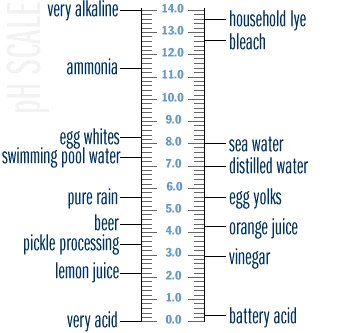

Understand About landed in pH
I am totally ignorance about pH of Water & Drinking Water before I live in the USA.
Now, after all these years of research, I feel to it is important to share these knowledge with everyone, in view of the danger of these highly polluted world.
pH 7 have 10 times Hydrogen ion (H+) than pH 8
Remember, if your drinking water pH is 7 that is neutral.
By the continuous blog awareness & education then we can spreadhead about Clean & Safe Drinking & Applicable Water for your Great Health.
pH Why Is it Important?
The pH of a sample of water is a measure of the concentration of hydrogen ions. The term pH was derived from the manner in which the hydrogen ion concentration is calculated - it is the negative logarithm of the hydrogen ion (H+) concentration. What this means to those of us who are not mathematicians is that at higher pH, there are fewer free hydrogen ions, and that a change of one pH unit reflects a tenfold change in the concentrations of the hydrogen ion. For example, there are 10 times as many hydrogen ions available at a pH of 7 than at a pH of 8.
The pH scale ranges from 0 to 14.
A pH of 7 is considered to be neutral.
Substances with pH of less that 7 are acidic;
substances with pH greater than 7 are basic.
ph scale
The pH of water determines the solubility (amount that can be dissolved in the water) and biological availability (amount that can be utilized by aquatic life) of chemical constituents such as nutrients (phosphorus, nitrogen, and carbon) and heavy metals (lead, copper, cadmium, etc.). For example, in addition to affecting how much and what form of phosphorus is most abundant in the water, pH may also determine whether aquatic life can use it. In the case of heavy metals, the degree to which they are soluble determines their toxicity. Metals tend to be more toxic at lower pH because they are more soluble.
Reasons for Natural Variation
Photosynthesis uses up dissolved carbon dioxide which acts like carbonic acid (H2CO3) in water. CO2 removal, in effect, reduces the acidity of the water and so pH increases. In contrast, respiration of organic matter produces CO2, which dissolves in water as carbonic acid, thereby lowering the pH. For this reason, pH may be higher during daylight hours and during the growing season, when photosynthesis is at a maximum. Respiration and decomposition processes lower pH. Like dissolved oxygen concentrations, pH may change with depth in a lake, due again to changes in photosynthesis and other chemical reactions. There is typically a seasonal decrease in pH in the lower layers of a stratified lake because CO2 accumulates. There is no light for plants to fix CO2 and decomposition releases CO2.
Fortunately, lake water is complex; it is full of chemical "shock absorbers" that prevent major changes in pH. Small or localized changes in pH are quickly modified by various chemical reactions, so little or no change may be measured. This ability to resist change in pH is called buffering capacity. Not only does the buffering capacity control would-be localized changes in pH, it controls the overall range of pH change under natural conditions. The pH scale may go from 0 to 14, but the pH of natural waters hovers between 6.5 and 8.5.
Expected Impact of Pollution
When pollution results in higher algal and plant growth (e.g., from increased temperature or excess nutrients), pH levels may increase, as allowed by the buffering capacity of the lake. Although these small changes in pH are not likely to have a direct impact on aquatic life, they greatly influence the availability and solubility of all chemical forms in the lake and may aggravate nutrient problems. For example, a change in pH may increase the solubility of phosphorus, making it more available for plant growth and resulting in a greater long-term demand for dissolved oxygen.
Values for pH are reported in standard pH units, usually to one or two decimal places depending upon the accuracy of the equipment used.
Since pH represents the negative logarithm of a number, it is not mathematically correct to calculate simple averages or other summary statistics.
Instead, pH should be reported as a median and range of values; alternatively the values could be converted to hydrogen ion concentrations, averaged, and re-converted to pH values.
Generally, during the summer months in the upper portion of a productive or eutrophic lakes, pH will range between 7.5 and 8.5. In the bottom of the lake or in less productive lakes, pH will be lower, 6.5 to 7.5, perhaps. This is a very general statement to provide an example of the differences you might measure.
The Case of Acid Rain
An important exception to the buffering of pH changes in lakes is the case of lakes affected by acid rain. Lakes that have received too much rain with a low pH (acid rain), lose their buffering capacity. At a certain point, it takes only a small bit of rain or snowmelt runoff for the pH to change. After that point, change occurs relatively quickly. According to the EPA, a pH of 5-6 or lower has been found to be directly toxic to fish (for additional information, see our acid rain links).
Water on the Web | Understanding | Water Quality | Parameters | pH
Now, after all these years of research, I feel to it is important to share these knowledge with everyone, in view of the danger of these highly polluted world.
pH 7 have 10 times Hydrogen ion (H+) than pH 8
Remember, if your drinking water pH is 7 that is neutral.
By the continuous blog awareness & education then we can spreadhead about Clean & Safe Drinking & Applicable Water for your Great Health.
pH Why Is it Important?
The pH of a sample of water is a measure of the concentration of hydrogen ions. The term pH was derived from the manner in which the hydrogen ion concentration is calculated - it is the negative logarithm of the hydrogen ion (H+) concentration. What this means to those of us who are not mathematicians is that at higher pH, there are fewer free hydrogen ions, and that a change of one pH unit reflects a tenfold change in the concentrations of the hydrogen ion. For example, there are 10 times as many hydrogen ions available at a pH of 7 than at a pH of 8.
The pH scale ranges from 0 to 14.
A pH of 7 is considered to be neutral.
Substances with pH of less that 7 are acidic;
substances with pH greater than 7 are basic.
ph scale
The pH of water determines the solubility (amount that can be dissolved in the water) and biological availability (amount that can be utilized by aquatic life) of chemical constituents such as nutrients (phosphorus, nitrogen, and carbon) and heavy metals (lead, copper, cadmium, etc.). For example, in addition to affecting how much and what form of phosphorus is most abundant in the water, pH may also determine whether aquatic life can use it. In the case of heavy metals, the degree to which they are soluble determines their toxicity. Metals tend to be more toxic at lower pH because they are more soluble.
Reasons for Natural Variation
Photosynthesis uses up dissolved carbon dioxide which acts like carbonic acid (H2CO3) in water. CO2 removal, in effect, reduces the acidity of the water and so pH increases. In contrast, respiration of organic matter produces CO2, which dissolves in water as carbonic acid, thereby lowering the pH. For this reason, pH may be higher during daylight hours and during the growing season, when photosynthesis is at a maximum. Respiration and decomposition processes lower pH. Like dissolved oxygen concentrations, pH may change with depth in a lake, due again to changes in photosynthesis and other chemical reactions. There is typically a seasonal decrease in pH in the lower layers of a stratified lake because CO2 accumulates. There is no light for plants to fix CO2 and decomposition releases CO2.
Fortunately, lake water is complex; it is full of chemical "shock absorbers" that prevent major changes in pH. Small or localized changes in pH are quickly modified by various chemical reactions, so little or no change may be measured. This ability to resist change in pH is called buffering capacity. Not only does the buffering capacity control would-be localized changes in pH, it controls the overall range of pH change under natural conditions. The pH scale may go from 0 to 14, but the pH of natural waters hovers between 6.5 and 8.5.
Expected Impact of Pollution
When pollution results in higher algal and plant growth (e.g., from increased temperature or excess nutrients), pH levels may increase, as allowed by the buffering capacity of the lake. Although these small changes in pH are not likely to have a direct impact on aquatic life, they greatly influence the availability and solubility of all chemical forms in the lake and may aggravate nutrient problems. For example, a change in pH may increase the solubility of phosphorus, making it more available for plant growth and resulting in a greater long-term demand for dissolved oxygen.
Values for pH are reported in standard pH units, usually to one or two decimal places depending upon the accuracy of the equipment used.
Since pH represents the negative logarithm of a number, it is not mathematically correct to calculate simple averages or other summary statistics.
Instead, pH should be reported as a median and range of values; alternatively the values could be converted to hydrogen ion concentrations, averaged, and re-converted to pH values.
Generally, during the summer months in the upper portion of a productive or eutrophic lakes, pH will range between 7.5 and 8.5. In the bottom of the lake or in less productive lakes, pH will be lower, 6.5 to 7.5, perhaps. This is a very general statement to provide an example of the differences you might measure.
The Case of Acid Rain
An important exception to the buffering of pH changes in lakes is the case of lakes affected by acid rain. Lakes that have received too much rain with a low pH (acid rain), lose their buffering capacity. At a certain point, it takes only a small bit of rain or snowmelt runoff for the pH to change. After that point, change occurs relatively quickly. According to the EPA, a pH of 5-6 or lower has been found to be directly toxic to fish (for additional information, see our acid rain links).
Water on the Web | Understanding | Water Quality | Parameters | pH
Saturday, February 05, 2005
Fraternity pledge died from excessive water intake
Well, remmeber, everything there is a limit.
Just thing of it, why the earth is suspended in the emptiness??
Why, at certain time one would feel hungry or thirsty, who need to eat or drink at that particular time.
In the "I-Medical Sutra" the 5 eleements , Water, Wood, Earth, Metal, Fire must be balance, any element imbalance would cause illness & eventure death.
The other thing is, it is a common sense that once too much water in the stomarch, the body would react & there is more load for the Kidney & bladder. Once these two organs give way then obviously it death.
Therefore, for your Great Heath, Never Ever Drink Excessive Water.
Fraternity pledge died from excessive water intake, coroner says
BY KELLI PHILLIPS Knight Ridder Newspapers
CHICO, Calif. - (KRT) - Coroner's officials said a 21-year-old Chico State student died from the effects of over-consumption of water, complicated by low body temperature, during a fraternity initiation.
Matthew Carrington, who grew up in Pleasant Hill, died Wednesday morning trying to become a member of Chi Tau fraternity.
He had been up all night, drinking large quantities of water from a 5-gallon jug, doing push-ups and answering trivia questions about other fraternity members, said Chico police Sgt. Dave Barrow.
During the night, a fan was used to blow air on him, family members said.
Carrington suffered a seizure and stopped breathing.
"It was just more than he could handle," said Kristi Vahl, a longtime friend.
According to the Butte County Coroner's Office, the cause of death was cardiac dysrhythmia due to electrolyte imbalance from water intoxication. A contributing factor was environmental hypothermia.
Drugs and alcohol were not a factor, police said. No arrests have been made, but it will be up to the district attorney whether to file charges, Barrow said.
On Thursday, as fraternity and sorority "rush week" activities continued, Chi Tau members refused to comment on Carrington's death or their pledge activities.
A former Chi Tau member, who asked that his name not be used because he still attends Chico, said that during a 2002 Chi Tau pledge activity, he was forced to drink milk until he threw up.
"I think for some guys there's a pressure to please," said J.W. Dell'Orto, a member of the agricultural fraternity Alpha Gamma Rho. "Seems like the younger guys are trying to impress the older frat brothers. It's like being a freshman in high school and getting invited to a senior party. You want to show them you're up for it."
Dell'Orto, a senior majoring in animal sciences, said Alpha Gamma Rho doesn't haze new members. Instead they host a barbeque and interview pledge candidates.
Molly Priest, 22, one of Carrington's roommates, said he didn't complain about the pledge activities, which included standing against a wall for hours and dressing up like a female prostitute.
"They were pushed to their limits," Priest said. "And Matt was pushed too hard."
Students said the university and police have cracked down on fraternities and alcohol-related activities since a 18-year-old fraternity pledge from Palo Alto died in 2000.
"Everyone parties here, not just the Greeks," said Dani Jimenez-Cruz, of Lambda Theta Nu. "It's what you make of it. You don't have to party if you don't want to, but the temptation is definitely there."
Two weeks ago, an 18-year-old Chico student nearly died from alcohol poisoning during a Sigma Chi pledge activity that involved drinking two 1.75 liter bottles of vodka. Butte County prosecutors said Thursday they plan to file charges against the fraternity member who provided the alcohol.
On Thursday afternoon, Erin Bixon, of Foothill Distributing Inc., wheeled cases of Budweiser into Riley's bar, a popular hangout frequented by members of nearby fraternities and sororities.
"Some kids try to find their limits and see what they can take," he said.
KRT Wire | 02/04/2005 | Fraternity pledge died from excessive water intake, coroner says
Just thing of it, why the earth is suspended in the emptiness??
Why, at certain time one would feel hungry or thirsty, who need to eat or drink at that particular time.
In the "I-Medical Sutra" the 5 eleements , Water, Wood, Earth, Metal, Fire must be balance, any element imbalance would cause illness & eventure death.
The other thing is, it is a common sense that once too much water in the stomarch, the body would react & there is more load for the Kidney & bladder. Once these two organs give way then obviously it death.
Therefore, for your Great Heath, Never Ever Drink Excessive Water.
Fraternity pledge died from excessive water intake, coroner says
BY KELLI PHILLIPS Knight Ridder Newspapers
CHICO, Calif. - (KRT) - Coroner's officials said a 21-year-old Chico State student died from the effects of over-consumption of water, complicated by low body temperature, during a fraternity initiation.
Matthew Carrington, who grew up in Pleasant Hill, died Wednesday morning trying to become a member of Chi Tau fraternity.
He had been up all night, drinking large quantities of water from a 5-gallon jug, doing push-ups and answering trivia questions about other fraternity members, said Chico police Sgt. Dave Barrow.
During the night, a fan was used to blow air on him, family members said.
Carrington suffered a seizure and stopped breathing.
"It was just more than he could handle," said Kristi Vahl, a longtime friend.
According to the Butte County Coroner's Office, the cause of death was cardiac dysrhythmia due to electrolyte imbalance from water intoxication. A contributing factor was environmental hypothermia.
Drugs and alcohol were not a factor, police said. No arrests have been made, but it will be up to the district attorney whether to file charges, Barrow said.
On Thursday, as fraternity and sorority "rush week" activities continued, Chi Tau members refused to comment on Carrington's death or their pledge activities.
A former Chi Tau member, who asked that his name not be used because he still attends Chico, said that during a 2002 Chi Tau pledge activity, he was forced to drink milk until he threw up.
"I think for some guys there's a pressure to please," said J.W. Dell'Orto, a member of the agricultural fraternity Alpha Gamma Rho. "Seems like the younger guys are trying to impress the older frat brothers. It's like being a freshman in high school and getting invited to a senior party. You want to show them you're up for it."
Dell'Orto, a senior majoring in animal sciences, said Alpha Gamma Rho doesn't haze new members. Instead they host a barbeque and interview pledge candidates.
Molly Priest, 22, one of Carrington's roommates, said he didn't complain about the pledge activities, which included standing against a wall for hours and dressing up like a female prostitute.
"They were pushed to their limits," Priest said. "And Matt was pushed too hard."
Students said the university and police have cracked down on fraternities and alcohol-related activities since a 18-year-old fraternity pledge from Palo Alto died in 2000.
"Everyone parties here, not just the Greeks," said Dani Jimenez-Cruz, of Lambda Theta Nu. "It's what you make of it. You don't have to party if you don't want to, but the temptation is definitely there."
Two weeks ago, an 18-year-old Chico student nearly died from alcohol poisoning during a Sigma Chi pledge activity that involved drinking two 1.75 liter bottles of vodka. Butte County prosecutors said Thursday they plan to file charges against the fraternity member who provided the alcohol.
On Thursday afternoon, Erin Bixon, of Foothill Distributing Inc., wheeled cases of Budweiser into Riley's bar, a popular hangout frequented by members of nearby fraternities and sororities.
"Some kids try to find their limits and see what they can take," he said.
KRT Wire | 02/04/2005 | Fraternity pledge died from excessive water intake, coroner says
Friday, February 04, 2005
NSF International Releases Final Report On Testing of Arsenic Treament Technologies
NSF is a Not-for-Profit Certification organization that research & report includes Water Contaminations & Drinking Water Safety standard..
The following press release is beneficial for all that concern about the Arsenic Treament in our Drinking Water System.
NSF Releases Final Reports on Testing of Arsenic Treatment Technologies
Helping Protect the Public from Exposure to High Levels of Arsenic in Drinking Water
(ANN ARBOR, MI USA) – To ensure drinking water technologies are available for consumers to reduce exposure to arsenic, the not-for-profit NSF International today announced the release of four final verification reports through the EPA/NSF Environmental Technology Verification (ETV) Drinking Water Systems (DWS) Center. These new reports were produced to specify testing results of drinking water treatment technologies that help consumers avoid exposure to arsenic, which can increase cancer risk and cause other serious health problems.
“These reports are an important step in protecting the public from arsenic exposure,” said Bruce Bartley, NSF’s technical manager in the ETV DWS Center. “By providing consumers with proven results of product evaluations, these evaluation reports accelerate the implementation of new drinking water technologies into the marketplace.”
The ETV DWS Center reports demonstrate a significant reduction of arsenic in drinking water. These tests were performed in small communities in three states in conjunction with Delta Industrial Services and the University of Alaska at Anchorage in Anchorage, Alaska; Watts Premier and MWH in Thermal, California; Kinetico, Inc. and Alcan Chemicals with Gannett Fleming in Carroll Township, Pennsylvania; and ADI International with Gannett Fleming in Sellersville, Pennsylvania.
In 2001, the U.S. Environmental Protection Agency (EPA) issued a new arsenic maximum contaminant level (MCL) of 10 micrograms per liter (µg/L). Since that time, public health officials throughout the United States have detected varying amounts of arsenic in many drinking water supplies, some well above EPA's new MCL. As of January 23, 2006, all public water systems will be required to comply with the 10 µg/L MCL.
With assistance through an EPA grant, NSF International entered into an agreement on October 1, 2000 with the EPA to form the ETV DWS Center. The ETV DWS Center is dedicated to providing independent performance evaluations of drinking water technologies and helping small communities comply with the 10 µg/L MCL.
The reports can be accessed at the following web pages:
Delta Industrial Services, Anchorage, Alaska Full Report: http://www.nsf.org/business/drinking_water_systems_center/pdf/Delta_Report.pdf
Watts Premier, Thermal, California Full Report:
http://www.nsf.org/business/drinking_water_systems_center/pdf/Watts_Report.pdf
Kinetico, Inc. and Alcan Chemicals, Carroll Township, Pennsylvania Full Report: http://www.nsf.org/business/drinking_water_systems_center/pdf/Kinetico-Alcan_ETV_Report.pdf
ADI International, Sellersville, Pennsylvania Full Report:
http://www.nsf.org/business/drinking_water_systems_center/pdf/ADI_Phase1_Report.pdf
“NSF expects the release of three additional reports on arsenic reduction technologies for drinking water in 2005,” concluded Bartley.
For additional information on these final reports, please contact Bruce Bartley at 1-800-NSF-MARK ext. 5148, (734) 769-5148, or bartley@nsf.org.
NSF International : Newsroom : News and Press Releases
The following press release is beneficial for all that concern about the Arsenic Treament in our Drinking Water System.
NSF Releases Final Reports on Testing of Arsenic Treatment Technologies
Helping Protect the Public from Exposure to High Levels of Arsenic in Drinking Water
(ANN ARBOR, MI USA) – To ensure drinking water technologies are available for consumers to reduce exposure to arsenic, the not-for-profit NSF International today announced the release of four final verification reports through the EPA/NSF Environmental Technology Verification (ETV) Drinking Water Systems (DWS) Center. These new reports were produced to specify testing results of drinking water treatment technologies that help consumers avoid exposure to arsenic, which can increase cancer risk and cause other serious health problems.
“These reports are an important step in protecting the public from arsenic exposure,” said Bruce Bartley, NSF’s technical manager in the ETV DWS Center. “By providing consumers with proven results of product evaluations, these evaluation reports accelerate the implementation of new drinking water technologies into the marketplace.”
The ETV DWS Center reports demonstrate a significant reduction of arsenic in drinking water. These tests were performed in small communities in three states in conjunction with Delta Industrial Services and the University of Alaska at Anchorage in Anchorage, Alaska; Watts Premier and MWH in Thermal, California; Kinetico, Inc. and Alcan Chemicals with Gannett Fleming in Carroll Township, Pennsylvania; and ADI International with Gannett Fleming in Sellersville, Pennsylvania.
In 2001, the U.S. Environmental Protection Agency (EPA) issued a new arsenic maximum contaminant level (MCL) of 10 micrograms per liter (µg/L). Since that time, public health officials throughout the United States have detected varying amounts of arsenic in many drinking water supplies, some well above EPA's new MCL. As of January 23, 2006, all public water systems will be required to comply with the 10 µg/L MCL.
With assistance through an EPA grant, NSF International entered into an agreement on October 1, 2000 with the EPA to form the ETV DWS Center. The ETV DWS Center is dedicated to providing independent performance evaluations of drinking water technologies and helping small communities comply with the 10 µg/L MCL.
The reports can be accessed at the following web pages:
Delta Industrial Services, Anchorage, Alaska Full Report: http://www.nsf.org/business/drinking_water_systems_center/pdf/Delta_Report.pdf
Watts Premier, Thermal, California Full Report:
http://www.nsf.org/business/drinking_water_systems_center/pdf/Watts_Report.pdf
Kinetico, Inc. and Alcan Chemicals, Carroll Township, Pennsylvania Full Report: http://www.nsf.org/business/drinking_water_systems_center/pdf/Kinetico-Alcan_ETV_Report.pdf
ADI International, Sellersville, Pennsylvania Full Report:
http://www.nsf.org/business/drinking_water_systems_center/pdf/ADI_Phase1_Report.pdf
“NSF expects the release of three additional reports on arsenic reduction technologies for drinking water in 2005,” concluded Bartley.
For additional information on these final reports, please contact Bruce Bartley at 1-800-NSF-MARK ext. 5148, (734) 769-5148, or bartley@nsf.org.
NSF International : Newsroom : News and Press Releases
Thursday, February 03, 2005
Salt water and waste heat equal drinking supply - Shall Consider Alternative Energy
Obviously, these is a significant development for Country like Middle East, Australia, Singapore. Hong Kong, .... those country that short of Drinking Water Supply.
But 3 issue that shall address is :-
1. Distilled Water is not Suitable for Human Drinking
2. Reverse Osmosis removed all the minerals is not Suitable for Drinking Either.
3. The cost of Productions.
Using Waste heat may be a better solution. However, the electrical plant that use coal or gasoline or even Bio-Mass may emit more polluted air to the atmosphere. Therefore, the environment factor & a Air, filtrations system shall be part of these system , so as to prevent further polluting the air.
Salt water and waste heat equal drinking supply
By John K. Borchardt, The Christian Science Monitor
HOUSTON — Every day, some 10,350 plants around the world create more than 8.3 billion gallons of drinking water for a growing thirsty population.
High-pressure plant pumps, such as these in Apollo Beach, Fla., desalinate salt water via forced filtration. By Scott Martin, AP
They do it by turning salt water into fresh, using steadily cheaper techniques. Now, two engineering professors at the University of Florida have taken that technology a step further with a novel idea.
Since power plants need water for cooling purposes and desalination plants need heat, why not combine the needs of both? The professors — James Klausner and Renwei Mei — calculate that their process would shave a sixth of the cost from today's most efficient technology.
"Water is critical to power production which requires a large amount of it," says Barbara Carney, desalination project manager with the National Energy Technology Laboratory, an arm of the United States Department of Energy in Morgantown, W.Va. Now, "instead of power plants being a net user of water, they will be producers of water."
Currently, desalination plants — most of them located in the Middle East — use one of two processes to turn salt water into fresh. One involves boiling salt water and condensing the vapor to produce fresh water, a process called distillation. The other uses high-pressure pumps to force salt water through fine filters that trap and remove waterborne salts and minerals in a process called reverse osmosis. Both technologies are energy intensive and not cost-effective on a large scale, except in areas such as Saudi Arabia where water is short and energy is cheap.
The new technique — called diffusion-driven desalination or DDD — uses heat wasted by electrical power plants.
Since that heat lacks the intensity to boil salt water, Klausner and Mei simply use it to heat the water. The water is then sprayed into the top of a diffusion tower — a column packed with a matrix that creates a kind of slow-motion waterfall. Meanwhile, warm air is pumped up from the bottom of the tower. As the trickling salt water meets the air, evaporation occurs. The evaporated — and now salt-free — water is captured. "Instead of releasing the evaporated water, it will be condensed to produce fresh water," explains Carney.
Thermoelectric power plants consume about 39% of the water used in the U.S., second only to agriculture. Most of the water is used for cooling to condense steam. Each kilowatt-hour of electricity requires about 25 gallons of water to produce. So indirectly, Americans may be using as much water when they turn on lights and run appliances as they do when taking showers and watering lawns.
So far, a prototype DDD plant is producing about 500 gallons of fresh water daily. Klausner and Mei calculate that a DDD plant tapping the waste heat from an average 100-megawatt power plant could produce 1.5 million gallons of fresh water daily. The estimated cost: $2.50 per thousand gallons, compared with $10 per thousand gallons for conventional distillation and $3 per thousand gallons for reverse osmosis.
Though DDD plants designed to produce up to 5 million gallons of fresh water daily appear reasonable, "market studies suggest that we have less barriers to market entry when working with smaller facilities," Klausner says. He estimates the cost to build a facility producing 1 million gallons per day would be about $2 million.
Utilities could build DDD plants next to their power stations and take advantage of their waste heat to produce fresh water for sale, he adds. Other industries that produce waste heat and use lots of fresh water — such as refineries, pulp and paper plants, and chemical- and food-processing plants — could also build their own DDD plants and supply themselves.
"We are very interested in moving the technology out of the laboratory into the commercial sector," Klausner says. To do this, the University of Florida is working with Global Water Technologies Inc. (GWT), a water purification company in Golden, Colo., and seeking to license the technology to other firms.
USATODAY.com - Salt water and waste heat equal drinking supply
But 3 issue that shall address is :-
1. Distilled Water is not Suitable for Human Drinking
2. Reverse Osmosis removed all the minerals is not Suitable for Drinking Either.
3. The cost of Productions.
Using Waste heat may be a better solution. However, the electrical plant that use coal or gasoline or even Bio-Mass may emit more polluted air to the atmosphere. Therefore, the environment factor & a Air, filtrations system shall be part of these system , so as to prevent further polluting the air.
Salt water and waste heat equal drinking supply
By John K. Borchardt, The Christian Science Monitor
HOUSTON — Every day, some 10,350 plants around the world create more than 8.3 billion gallons of drinking water for a growing thirsty population.
High-pressure plant pumps, such as these in Apollo Beach, Fla., desalinate salt water via forced filtration. By Scott Martin, AP
They do it by turning salt water into fresh, using steadily cheaper techniques. Now, two engineering professors at the University of Florida have taken that technology a step further with a novel idea.
Since power plants need water for cooling purposes and desalination plants need heat, why not combine the needs of both? The professors — James Klausner and Renwei Mei — calculate that their process would shave a sixth of the cost from today's most efficient technology.
"Water is critical to power production which requires a large amount of it," says Barbara Carney, desalination project manager with the National Energy Technology Laboratory, an arm of the United States Department of Energy in Morgantown, W.Va. Now, "instead of power plants being a net user of water, they will be producers of water."
Currently, desalination plants — most of them located in the Middle East — use one of two processes to turn salt water into fresh. One involves boiling salt water and condensing the vapor to produce fresh water, a process called distillation. The other uses high-pressure pumps to force salt water through fine filters that trap and remove waterborne salts and minerals in a process called reverse osmosis. Both technologies are energy intensive and not cost-effective on a large scale, except in areas such as Saudi Arabia where water is short and energy is cheap.
The new technique — called diffusion-driven desalination or DDD — uses heat wasted by electrical power plants.
Since that heat lacks the intensity to boil salt water, Klausner and Mei simply use it to heat the water. The water is then sprayed into the top of a diffusion tower — a column packed with a matrix that creates a kind of slow-motion waterfall. Meanwhile, warm air is pumped up from the bottom of the tower. As the trickling salt water meets the air, evaporation occurs. The evaporated — and now salt-free — water is captured. "Instead of releasing the evaporated water, it will be condensed to produce fresh water," explains Carney.
Thermoelectric power plants consume about 39% of the water used in the U.S., second only to agriculture. Most of the water is used for cooling to condense steam. Each kilowatt-hour of electricity requires about 25 gallons of water to produce. So indirectly, Americans may be using as much water when they turn on lights and run appliances as they do when taking showers and watering lawns.
So far, a prototype DDD plant is producing about 500 gallons of fresh water daily. Klausner and Mei calculate that a DDD plant tapping the waste heat from an average 100-megawatt power plant could produce 1.5 million gallons of fresh water daily. The estimated cost: $2.50 per thousand gallons, compared with $10 per thousand gallons for conventional distillation and $3 per thousand gallons for reverse osmosis.
Though DDD plants designed to produce up to 5 million gallons of fresh water daily appear reasonable, "market studies suggest that we have less barriers to market entry when working with smaller facilities," Klausner says. He estimates the cost to build a facility producing 1 million gallons per day would be about $2 million.
Utilities could build DDD plants next to their power stations and take advantage of their waste heat to produce fresh water for sale, he adds. Other industries that produce waste heat and use lots of fresh water — such as refineries, pulp and paper plants, and chemical- and food-processing plants — could also build their own DDD plants and supply themselves.
"We are very interested in moving the technology out of the laboratory into the commercial sector," Klausner says. To do this, the University of Florida is working with Global Water Technologies Inc. (GWT), a water purification company in Golden, Colo., and seeking to license the technology to other firms.
USATODAY.com - Salt water and waste heat equal drinking supply
NRDC: What's on Tap? - The Karma of Health??
Ignorance is always the cause of the health concern later.
That is exactly the "Cause - Effect" rather call "Karma"
This article is produced by NRDC.
This is a useful reference for all concern.
What's on Tap?
Grading Drinking Water in U.S. Cities
Executive Summary
Every day more than 240 million of us in this country turn on our faucets in order to drink, bathe, and cook, using water from public water systems. And as we do, we often take the purity of our tap water for granted. We shouldn't. Before it comes out of our taps, water in most cities usually undergoes a complex treatment process, often including filtration and disinfection. As good as our municipal water systems can be (and they can be very good), they also can fail -- sometimes tragically. In 1999, for example, more than 1,000 people fell ill at a county fair in upstate New York after ingesting an extremely virulent strain of E. coli bacteria; a three-year-old girl and an elderly man died when their bodies could not fight off the pathogen.
1 This is just one incident; health officials have documented scores of similar waterborne disease outbreaks in towns and cities across the nation during the past decade.
So, just how safe is our drinking water? In a careful and independent study, NRDC evaluated the quality of drinking water supplies in 19 cities around the country.
2 We selected cities that represent the broadest range of American city water supplies and reviewed tap water quality data, Environmental Protection Agency (EPA) compliance records, and water suppliers' annual reports (material required by law in order to inform citizens of the overall health of their tap water; also called "right-to-know reports").
3 In addition, we gathered information on pollution sources that may contaminate the lakes, rivers, or underground aquifers that cities use as drinking water sources. Finally, we evaluated our findings and issued grades for each city in three areas:
* water quality and compliance
* right-to-know reports
* source water protection
NRDC found that, although drinking water purity has improved slightly during the past 15 years in most cities, overall tap water quality varies widely from city to city. Some cities like Chicago have excellent tap water; most cities have good or mediocre tap water. Yet several cities -- such as Albuquerque, Fresno, and San Francisco -- have water that is sufficiently contaminated so as to pose potential health risks to some consumers, particularly to pregnant women, infants, children, the elderly, and people with compromised immune systems, according to Dr. David Ozonoff, chair of the Environmental Health Program at Boston University School of Public Health and a nationally known expert on drinking water and health issues.
While tap water quality varies, there is one overarching truth that applies to all U.S. cities: unless we take steps now, our tap water will get worse. Two factors pose imminent threats to drinking water quality in America:
* First, we are relying on pipes that are, on average, a century old. The water systems in many cities -- including Atlanta, Boston, and Washington, D.C. -- were built toward the end of the 19th century. Not only is our water supply infrastructure breaking down at alarming rates (the nation suffered more than 200,000 water main ruptures in 2002), but old pipes can leach contaminants and breed bacteria in drinking water.
* Second, regulatory and other actions by the Bush administration threaten the purity of American tap water. These actions include: weakening legislative protections for source waters, stalling on issuing new standards for contaminants, delaying the strengthening of existing standards, and cutting and even eliminating budgets for protective programs. Read More...
NRDC: What's on Tap? - Executive Summary
That is exactly the "Cause - Effect" rather call "Karma"
This article is produced by NRDC.
This is a useful reference for all concern.
What's on Tap?
Grading Drinking Water in U.S. Cities
Executive Summary
Every day more than 240 million of us in this country turn on our faucets in order to drink, bathe, and cook, using water from public water systems. And as we do, we often take the purity of our tap water for granted. We shouldn't. Before it comes out of our taps, water in most cities usually undergoes a complex treatment process, often including filtration and disinfection. As good as our municipal water systems can be (and they can be very good), they also can fail -- sometimes tragically. In 1999, for example, more than 1,000 people fell ill at a county fair in upstate New York after ingesting an extremely virulent strain of E. coli bacteria; a three-year-old girl and an elderly man died when their bodies could not fight off the pathogen.
1 This is just one incident; health officials have documented scores of similar waterborne disease outbreaks in towns and cities across the nation during the past decade.
So, just how safe is our drinking water? In a careful and independent study, NRDC evaluated the quality of drinking water supplies in 19 cities around the country.
2 We selected cities that represent the broadest range of American city water supplies and reviewed tap water quality data, Environmental Protection Agency (EPA) compliance records, and water suppliers' annual reports (material required by law in order to inform citizens of the overall health of their tap water; also called "right-to-know reports").
3 In addition, we gathered information on pollution sources that may contaminate the lakes, rivers, or underground aquifers that cities use as drinking water sources. Finally, we evaluated our findings and issued grades for each city in three areas:
* water quality and compliance
* right-to-know reports
* source water protection
NRDC found that, although drinking water purity has improved slightly during the past 15 years in most cities, overall tap water quality varies widely from city to city. Some cities like Chicago have excellent tap water; most cities have good or mediocre tap water. Yet several cities -- such as Albuquerque, Fresno, and San Francisco -- have water that is sufficiently contaminated so as to pose potential health risks to some consumers, particularly to pregnant women, infants, children, the elderly, and people with compromised immune systems, according to Dr. David Ozonoff, chair of the Environmental Health Program at Boston University School of Public Health and a nationally known expert on drinking water and health issues.
While tap water quality varies, there is one overarching truth that applies to all U.S. cities: unless we take steps now, our tap water will get worse. Two factors pose imminent threats to drinking water quality in America:
* First, we are relying on pipes that are, on average, a century old. The water systems in many cities -- including Atlanta, Boston, and Washington, D.C. -- were built toward the end of the 19th century. Not only is our water supply infrastructure breaking down at alarming rates (the nation suffered more than 200,000 water main ruptures in 2002), but old pipes can leach contaminants and breed bacteria in drinking water.
* Second, regulatory and other actions by the Bush administration threaten the purity of American tap water. These actions include: weakening legislative protections for source waters, stalling on issuing new standards for contaminants, delaying the strengthening of existing standards, and cutting and even eliminating budgets for protective programs. Read More...
NRDC: What's on Tap? - Executive Summary
Wednesday, February 02, 2005
Tallevast's toxic plume gets bigger
The issue of Ground water contaminations is not happening over night or yesteryear.
You see due to the industrailization & blooming populations especially the baby bloomer's era, the heavy use of chemical fertilizer & also years of using animal waste can add up altogether.
Therefore, the issue of Contaminations, if it is checked earlier, it would not be having a major issue today..
In my opinion, the whole mother earth ground water are contaminated.. The thing for us to do is to size up the contaminations & take step to put things right for our Great health.
Tallevast's toxic plume gets bigger
SCOTT RADWAY Herald Staff Writer
TALLEVAST - Groundwater contamination from the old American Beryllium plant has spread across 50 acres in this small community.
That area is double the size of the most recent estimate of the plume, according to a report released Tuesday.
"We were originally told the plume was contained to the (plant) site and had seeped off-site just a bit," said Laura Ward, president of the Tallevast community group FOCUS.
"And look at where they report put it today," she said.
It was in late 2003 that residents here were told not to worry, the cancer-causing solvents from the old plant had remained mostly on site.
The old plant sits like a hub of a wheel with spokes of homes running out in nearly every direction. But experts said only a few properties adjacent to the plant might be impacted, if any.
Then in 2004, state tests showed the plume was three times larger and some resident wells were contaminated. The report released Tuesday aims to finally map the plume, except for three remaining edges.
Lockheed Martin, which is responsible for cleaning up the contamination, prepared the report as part of a state consent order. The deadline for the report was Tuesday.
"I think we were all surprised the plume got as far as it did," said Gail Rymer, spokeswoman for Lockheed. "But now we know what we are dealing with and we can move very quickly to the (clean-up) phase."
Lockheed did not include a map of the plume with its report. Once the final three areas of contamination are plotted a map will be prepared, officials said.
Rymer explained that this round of tests was aimed primarily at determining the exact area of the contamination so it could be remediated.
If the Florida Department of Environmental Protection reviews and approves the report, Lockheed can begin hammering out the clean-up plan. Lockheed would have 45 days to offer a plan and then another 15 days to finalize it, said DEP Tallevast project manager William Kutash.
Rymer said some drilling continues in three areas of Tallevast where the last three edges of the plume need to be defined. Those areas - one northeast in a wooded area, one southwest on a golf course, and one southeast on farmland - still show small traces of contaminants and Lockheed will stop drilling only when no traces are found, she said.
The report on that work is expected to be sent to the DEP in early March. But a clean-up plan can be developed when DEP approves Tuesday's report, she said.
Kutash said a review usually takes 30 days, but this one will be expedited.
Rymer said even though the plume is larger, Lockheed believes no one in the community is still at risk to exposure. In May of 2004, the remaining residents using wells for drinking water were put on county water.
The plume runs out about 500 feet north of the plant on Tallevast Road, about 2,000 feet east, 1,000 feet west and 1,500 feet south of the site, Rymer said. A half mile is 2,640 feet.
County health officials said they could not comment on the report - which runs to more than 2,000 pages - until they had time to review it. County health officials have said on several occasions that drinking water wells in a half-mile radius around the plant were tested in 2004 to ensure no one was being exposed to contamination in the area.
Tim Varney, a health and environmental consultant for Tallevast residents, said once the report is reviewed, it can help the state ensure a cleanup is done properly and it can help county officials study what the health impact on the community has been.
"But there is an awful lot of work that has been done and it will take a while to review it," Varney said.
Manatee County was also awaiting the report to help it design an overlay district for Tallevast that could potentially require builders to take special care because of the contamination. The county also needs the data to evaluate a planned road widening project for Tallevast.
County planners and commissioners received copies Tuesday as well.
The main contaminant being tracked is trichloroethylene, or TCE.
Drinking or breathing high levels of TCE may cause damage to the nervous system, damage to the liver and lungs, abnormal heart beat, coma and possible death, according to the federal Agency for Toxic Substances and Disease Registry, a division of the Centers for Disease Control and Prevention in Atlanta.
Lockheed has spent $3 million so far testing for it, Rymer said. TCE was found in highest concentration near the plant site and then its levels tapper off.
TCE is heavier than water and generally sinks until it hits an impermeable layer then moves horizontally, unless it finds a passageway to go deeper.
Rymer said the TCE is generally contained to the upper aquifer which runs down to about 30 to 40 feet where often clay layers prevent it from sinking further. The TCE in the upper aquifer was generally found at 20 feet or deeper because of its weight.
In some areas closer to the source, TCE was found deeper in the water table, going as deep as 278 feet in one site. In what is called the intermediate aquifer, Rymer said the majority of the contamination went down to 150 feet.
The deepest aquifer, called the Floridan aquifer, starts at about 300 feet and the contamination is not believed to have penetrated that layer.
As part of the report, Lockheed also did extensive soil testing. The report summary noted that sampling found low-levels of such things as arsenic in some samples. But Rymer said those levels did not present a health risk to residents.
Tallevast's toxic plume gets bigger
You see due to the industrailization & blooming populations especially the baby bloomer's era, the heavy use of chemical fertilizer & also years of using animal waste can add up altogether.
Therefore, the issue of Contaminations, if it is checked earlier, it would not be having a major issue today..
In my opinion, the whole mother earth ground water are contaminated.. The thing for us to do is to size up the contaminations & take step to put things right for our Great health.
Tallevast's toxic plume gets bigger
SCOTT RADWAY Herald Staff Writer
TALLEVAST - Groundwater contamination from the old American Beryllium plant has spread across 50 acres in this small community.
That area is double the size of the most recent estimate of the plume, according to a report released Tuesday.
"We were originally told the plume was contained to the (plant) site and had seeped off-site just a bit," said Laura Ward, president of the Tallevast community group FOCUS.
"And look at where they report put it today," she said.
It was in late 2003 that residents here were told not to worry, the cancer-causing solvents from the old plant had remained mostly on site.
The old plant sits like a hub of a wheel with spokes of homes running out in nearly every direction. But experts said only a few properties adjacent to the plant might be impacted, if any.
Then in 2004, state tests showed the plume was three times larger and some resident wells were contaminated. The report released Tuesday aims to finally map the plume, except for three remaining edges.
Lockheed Martin, which is responsible for cleaning up the contamination, prepared the report as part of a state consent order. The deadline for the report was Tuesday.
"I think we were all surprised the plume got as far as it did," said Gail Rymer, spokeswoman for Lockheed. "But now we know what we are dealing with and we can move very quickly to the (clean-up) phase."
Lockheed did not include a map of the plume with its report. Once the final three areas of contamination are plotted a map will be prepared, officials said.
Rymer explained that this round of tests was aimed primarily at determining the exact area of the contamination so it could be remediated.
If the Florida Department of Environmental Protection reviews and approves the report, Lockheed can begin hammering out the clean-up plan. Lockheed would have 45 days to offer a plan and then another 15 days to finalize it, said DEP Tallevast project manager William Kutash.
Rymer said some drilling continues in three areas of Tallevast where the last three edges of the plume need to be defined. Those areas - one northeast in a wooded area, one southwest on a golf course, and one southeast on farmland - still show small traces of contaminants and Lockheed will stop drilling only when no traces are found, she said.
The report on that work is expected to be sent to the DEP in early March. But a clean-up plan can be developed when DEP approves Tuesday's report, she said.
Kutash said a review usually takes 30 days, but this one will be expedited.
Rymer said even though the plume is larger, Lockheed believes no one in the community is still at risk to exposure. In May of 2004, the remaining residents using wells for drinking water were put on county water.
The plume runs out about 500 feet north of the plant on Tallevast Road, about 2,000 feet east, 1,000 feet west and 1,500 feet south of the site, Rymer said. A half mile is 2,640 feet.
County health officials said they could not comment on the report - which runs to more than 2,000 pages - until they had time to review it. County health officials have said on several occasions that drinking water wells in a half-mile radius around the plant were tested in 2004 to ensure no one was being exposed to contamination in the area.
Tim Varney, a health and environmental consultant for Tallevast residents, said once the report is reviewed, it can help the state ensure a cleanup is done properly and it can help county officials study what the health impact on the community has been.
"But there is an awful lot of work that has been done and it will take a while to review it," Varney said.
Manatee County was also awaiting the report to help it design an overlay district for Tallevast that could potentially require builders to take special care because of the contamination. The county also needs the data to evaluate a planned road widening project for Tallevast.
County planners and commissioners received copies Tuesday as well.
The main contaminant being tracked is trichloroethylene, or TCE.
Drinking or breathing high levels of TCE may cause damage to the nervous system, damage to the liver and lungs, abnormal heart beat, coma and possible death, according to the federal Agency for Toxic Substances and Disease Registry, a division of the Centers for Disease Control and Prevention in Atlanta.
Lockheed has spent $3 million so far testing for it, Rymer said. TCE was found in highest concentration near the plant site and then its levels tapper off.
TCE is heavier than water and generally sinks until it hits an impermeable layer then moves horizontally, unless it finds a passageway to go deeper.
Rymer said the TCE is generally contained to the upper aquifer which runs down to about 30 to 40 feet where often clay layers prevent it from sinking further. The TCE in the upper aquifer was generally found at 20 feet or deeper because of its weight.
In some areas closer to the source, TCE was found deeper in the water table, going as deep as 278 feet in one site. In what is called the intermediate aquifer, Rymer said the majority of the contamination went down to 150 feet.
The deepest aquifer, called the Floridan aquifer, starts at about 300 feet and the contamination is not believed to have penetrated that layer.
As part of the report, Lockheed also did extensive soil testing. The report summary noted that sampling found low-levels of such things as arsenic in some samples. But Rymer said those levels did not present a health risk to residents.
Tallevast's toxic plume gets bigger
Monday, January 31, 2005
Researcher finds fluoride levels in tea can affect drinkers - Fluorosis
The fluoride level in Tap water is the main cause of the the patient faced - Fluorosis!!
From my research into tea production. It is unlikely due to the tea.
For these instants, it is best to check with the city authority; about their fluorosis contents.
The consummer need to know that the best thing for them to do is install a NSF certified Water Filter system, and also make sure that the replacement filter need to be change when it is due.
Researcher finds fluoride levels in tea can affect drinkers
By ALAN BAVLEY Kansas City Star
KANSAS CITY, Mo. - Take it easy, tea drinkers.
A researcher at Washington University in St. Louis has found that some instant teas contain startlingly high concentrations of fluoride. When the tea is mixed with fluoridated tap water, the fluoride reaches levels that would set off alarms at the Environmental Protection Agency.
Brewed tea contains comparable amounts of fluoride, studies show.
"For someone drinking two or three glasses a day, I don't think it's a problem," said Michael Whyte, a professor at Washington University's School of Medicine. "But you can imagine somebody in Florida or Arizona drinking two or three quarts of tea a day."
That kind of imbibing caused big trouble for one of Whyte's patients.
The 52-year-old woman had a chronic backache. Her spine and hip bones were unusually thick.
Whyte determined she had fluorosis, a condition manifest by dense and dangerously brittle bones caused by excess fluoride consumption. But he couldn't figure out the source until his patient told him how much instant tea she had been drinking: 1 to 2 gallons a day. Double strength. Her entire adult life.
Whyte bought 10 kinds of instant tea, prepared it at regular strength and sent it to two labs. The fluoride ranged from 1 part per million to 6.5 parts per million. The EPA safety limit for drinking water is 4 parts per million, and the limit for bottled beverages is 1.4 parts per million to 2.4 parts per million.
Whyte wants to alert other doctors that they also may have patients with tea-induced fluorosis. "I reckon there's more cases of this," he said.
The Tea Council of the USA, reacting to Whyte's study, said that "when consumed as part of a healthy diet, tea poses no health risks and likely even provides health benefits."
KRT Wire | 01/30/2005 | Researcher finds fluoride levels in tea can affect drinkers
From my research into tea production. It is unlikely due to the tea.
For these instants, it is best to check with the city authority; about their fluorosis contents.
The consummer need to know that the best thing for them to do is install a NSF certified Water Filter system, and also make sure that the replacement filter need to be change when it is due.
Researcher finds fluoride levels in tea can affect drinkers
By ALAN BAVLEY Kansas City Star
KANSAS CITY, Mo. - Take it easy, tea drinkers.
A researcher at Washington University in St. Louis has found that some instant teas contain startlingly high concentrations of fluoride. When the tea is mixed with fluoridated tap water, the fluoride reaches levels that would set off alarms at the Environmental Protection Agency.
Brewed tea contains comparable amounts of fluoride, studies show.
"For someone drinking two or three glasses a day, I don't think it's a problem," said Michael Whyte, a professor at Washington University's School of Medicine. "But you can imagine somebody in Florida or Arizona drinking two or three quarts of tea a day."
That kind of imbibing caused big trouble for one of Whyte's patients.
The 52-year-old woman had a chronic backache. Her spine and hip bones were unusually thick.
Whyte determined she had fluorosis, a condition manifest by dense and dangerously brittle bones caused by excess fluoride consumption. But he couldn't figure out the source until his patient told him how much instant tea she had been drinking: 1 to 2 gallons a day. Double strength. Her entire adult life.
Whyte bought 10 kinds of instant tea, prepared it at regular strength and sent it to two labs. The fluoride ranged from 1 part per million to 6.5 parts per million. The EPA safety limit for drinking water is 4 parts per million, and the limit for bottled beverages is 1.4 parts per million to 2.4 parts per million.
Whyte wants to alert other doctors that they also may have patients with tea-induced fluorosis. "I reckon there's more cases of this," he said.
The Tea Council of the USA, reacting to Whyte's study, said that "when consumed as part of a healthy diet, tea poses no health risks and likely even provides health benefits."
KRT Wire | 01/30/2005 | Researcher finds fluoride levels in tea can affect drinkers
Sunday, January 30, 2005
Chlorine factories a mercury mess?
This is serious!!!!!!
I am sure as a Businessmen , they ought to think about their social responsibility about people. Just imagine, if all their customer died of mercury poisoning. Then, their business have no customer's. What is the end result??
When I visit My parents home town in China again during the early 90's, I was sad to knew that the family Drinking well have to shut down after my 1st ancestor set up the 1st drinking water well in this island. The Well history is over 2,000 years. This Drinking water well actually served for the township with 5,000 population. I am told by the official that the well shut down due to Mercury poisoning.
Therefore, the coast of the that island is also affected as well. The fishes that along the straight opposite Taiwan may also contaminated. So you can imagine, if the action were not taken, the island total population of 600,000 may all be affect by mercury.
So, be it in China..Europe or USA..there must be a high standard & enforcement on contamination to our drinking water.
Chlorine factories a mercury mess?
Activists, industry spar over toxic metal emissions
The Associated Press Updated: 3:33 p.m. ET Jan. 26, 2005
WASHINGTON - Environmentalists on Wednesday released a report claiming that the nine factories in the United States still making chlorine with mercury are emitting dangerous amounts of the toxic metal. The industry acknowledged that tons of mercury are unaccounted for each year, but did not believe that the mercury is being dumped into the air or water.
Chlorine at such plants is made by pumping electrically charged salty water through a vat of mercury, a process devised more than 100 years ago. Environmentalists say these plants are a largely ignored and unchecked source of mercury pollution.
Mercury settles in waterways and accumulates in fish. In humans who eat those fish, the metal can cause neurological and developmental problems, particularly in fetuses and children.
Citing chlorine factories as a “major global source of mercury,” the Washington, D.C.-based environmental group Oceana called on the Environmental Protection Agency to require all the plants to convert to mercury-free technology by 2008.
“Fifteen years ago, Congress amended the Clean Air Act, which requires companies like these to continually improve to cut down releases of hazardous chemicals like mercury,” Andrew Sharpless, Oceana’s chief executive officer, said at a news conference. “But rather than enforce this law, the EPA is still giving these chlorine plants a pass and letting them continue to release tons of mercury every year with their 19th century technology.”
Industry's response
Arthur Duncan, vice president of safety and health for The Chlorine Institute, a trade group based in Arlington, Va., said emissions have been significantly reduced in the past decade.
“Certainly mercury has been a concern for a long time to people and it’s an environmental issue that we’re working to address,” he said.
The calculations of how much mercury is dispersed into the environment are in dispute. The industry, in reports to the EPA, says eight tons — about three 50-gallon barrels — were emitted in 2003.
For example, the companies said a plant in Muscle Shoals, Ala., emitted 1,757 pounds of mercury that year; another, in New Castle, Del., released 2,863 pounds.
But the environmentalists say these calculations may be wrong, because while the companies monitor the amount of mercury that goes out of their smokestacks, they merely estimate the amount that evaporates and leaves the factories through vents.
In addition, industry officials acknowledge that they cannot account for an additional 30 tons a year. They say that it could be stuck in factory pipes, and they are trying to find it.
The environmentalists are skeptical. They think even more mercury is missing, pointing out that more mercury is delivered to the plants each year than is going out — 65 tons more in 2000 alone, said Oceana’s Jacqueline Savitz, co-author of the report.
But industry officials say that mercury purchases do not necessarily equal mercury use, because some of it is simply stored to be used later.
EPA spokeswoman Cynthia Bergman said the question of where all this mercury went is very important to her agency, but that the EPA’s “best information indicates that the mercury is not being emitted into the air.”
Curbs on power plants
While total mercury emissions in the United States have fallen substantially since 1990, power plants remain the largest remaining human-caused source. They released 90,370 pounds of mercury into the air in 2002, the most recent year for which EPA data are available.
Federal guidelines released last February place strict limits on the amount of mercury that power plants can release.
They place no similar caps on chlorine plants, but do require more frequent emission measurements and equipment inspections, “significantly more stringent requirements” than had been in force before, said Vito Fiore, a vice president of Vulcan Chemicals, which has a plant in Port Edwards, Wis.
MSNBC - Chlorine factories a mercury mess?
I am sure as a Businessmen , they ought to think about their social responsibility about people. Just imagine, if all their customer died of mercury poisoning. Then, their business have no customer's. What is the end result??
When I visit My parents home town in China again during the early 90's, I was sad to knew that the family Drinking well have to shut down after my 1st ancestor set up the 1st drinking water well in this island. The Well history is over 2,000 years. This Drinking water well actually served for the township with 5,000 population. I am told by the official that the well shut down due to Mercury poisoning.
Therefore, the coast of the that island is also affected as well. The fishes that along the straight opposite Taiwan may also contaminated. So you can imagine, if the action were not taken, the island total population of 600,000 may all be affect by mercury.
So, be it in China..Europe or USA..there must be a high standard & enforcement on contamination to our drinking water.
Chlorine factories a mercury mess?
Activists, industry spar over toxic metal emissions
The Associated Press Updated: 3:33 p.m. ET Jan. 26, 2005
WASHINGTON - Environmentalists on Wednesday released a report claiming that the nine factories in the United States still making chlorine with mercury are emitting dangerous amounts of the toxic metal. The industry acknowledged that tons of mercury are unaccounted for each year, but did not believe that the mercury is being dumped into the air or water.
Chlorine at such plants is made by pumping electrically charged salty water through a vat of mercury, a process devised more than 100 years ago. Environmentalists say these plants are a largely ignored and unchecked source of mercury pollution.
Mercury settles in waterways and accumulates in fish. In humans who eat those fish, the metal can cause neurological and developmental problems, particularly in fetuses and children.
Citing chlorine factories as a “major global source of mercury,” the Washington, D.C.-based environmental group Oceana called on the Environmental Protection Agency to require all the plants to convert to mercury-free technology by 2008.
“Fifteen years ago, Congress amended the Clean Air Act, which requires companies like these to continually improve to cut down releases of hazardous chemicals like mercury,” Andrew Sharpless, Oceana’s chief executive officer, said at a news conference. “But rather than enforce this law, the EPA is still giving these chlorine plants a pass and letting them continue to release tons of mercury every year with their 19th century technology.”
Industry's response
Arthur Duncan, vice president of safety and health for The Chlorine Institute, a trade group based in Arlington, Va., said emissions have been significantly reduced in the past decade.
“Certainly mercury has been a concern for a long time to people and it’s an environmental issue that we’re working to address,” he said.
The calculations of how much mercury is dispersed into the environment are in dispute. The industry, in reports to the EPA, says eight tons — about three 50-gallon barrels — were emitted in 2003.
For example, the companies said a plant in Muscle Shoals, Ala., emitted 1,757 pounds of mercury that year; another, in New Castle, Del., released 2,863 pounds.
But the environmentalists say these calculations may be wrong, because while the companies monitor the amount of mercury that goes out of their smokestacks, they merely estimate the amount that evaporates and leaves the factories through vents.
In addition, industry officials acknowledge that they cannot account for an additional 30 tons a year. They say that it could be stuck in factory pipes, and they are trying to find it.
The environmentalists are skeptical. They think even more mercury is missing, pointing out that more mercury is delivered to the plants each year than is going out — 65 tons more in 2000 alone, said Oceana’s Jacqueline Savitz, co-author of the report.
But industry officials say that mercury purchases do not necessarily equal mercury use, because some of it is simply stored to be used later.
EPA spokeswoman Cynthia Bergman said the question of where all this mercury went is very important to her agency, but that the EPA’s “best information indicates that the mercury is not being emitted into the air.”
Curbs on power plants
While total mercury emissions in the United States have fallen substantially since 1990, power plants remain the largest remaining human-caused source. They released 90,370 pounds of mercury into the air in 2002, the most recent year for which EPA data are available.
Federal guidelines released last February place strict limits on the amount of mercury that power plants can release.
They place no similar caps on chlorine plants, but do require more frequent emission measurements and equipment inspections, “significantly more stringent requirements” than had been in force before, said Vito Fiore, a vice president of Vulcan Chemicals, which has a plant in Port Edwards, Wis.
MSNBC - Chlorine factories a mercury mess?
Saturday, January 29, 2005
Danone takes a hit from US water business
It is very obvious that from commercial research. Water is business is going to be huge in US & the world.
With giant corporation's like Nestle, Danone, even GE are into the business of Water.
On the issue of Cooler, according to the "I-Medicine Sutra", "Chilled Water" is considered as Cool or Cold effect for the body, our internal body temperature is at boilding point. with the cold water into the body, that would cause conflict of "Chi".
Therefore, for your great Health avoid drink Cold or Chilled Water.
Danone takes a hit from US water business
27/01/2005 - Danone’s rapid expansion into the home and office delivery (HOD) bottled water market has given it a global market share to match that of rival Nestlé in recent years, but the growth has not come without a price, writes Chris Jones.
The French group this week announced that it was taking a charge of around €600 million relating to its US and EU partnership with Japan’s Suntory group, a result of increasing competition and an inevitable slow-down in growth.
The company, which also produces a wide range of dairy products and biscuits, said that it would take a one-off charge of €450 million in its 2004 consolidated accounts relating to its holding in DS Waters, the US joint venture that it formed with Suntory in late 2003.
This one-time charge relates to the writing–off of the goodwill of Danone’s holding in DS Waters, as well as a provision for its commitment to buy out Suntory’s share of the business by 2008 should the Japanese firm decide to sell – a move considered likely by the French group.
Danone, which has owned the Evian and Volvic bottled water brands (among others) for many years, is a relative newcomer to the HOD sector, making its first US acquisition (McKesson Water Products, the leading HOD player on the West Coast), in early 2000.
Since then, the French company has added a number of other HOD operators in both the US and Europe, and merged its US business with the Suntory Water Group in 2003, creating the US HOD market leader with leading positions in many of the top 25 cities in the United States.
But there are signs that the glory days for HOD operators - driven by the aggressive acquisitions of both Danone and Nestlé on the back of growing awareness of the health benefits of water consumption - may finally be nearing an end. Danone cited “slower volume growth patterns for the HOD industry, an increasingly aggressive pricing environment on HOD formats and faster-than-expected erosion of cooler rental revenues” as the principal reasons for the charge.
“These negative factors have thus far more than offset the cost synergies generated by the combination of Danone and Suntory's HOD businesses,” the French firm said.
DS Water Danone has sales of around $800 million, but a book value of less than $400 million following the write down.
Danone has set itself the deadline of “the end of the first half of 2005” to find a solution for the problems facing DS Waters, but restructuring has been underway there for some time, with a significant reduction in the number of production plants already underway.
Danone’s problems are not limited to the US. West European HOD volumes increased 18 per cent in 2003 according to analysts Zenith International, but Danone continues to struggle there as well, taking a charge of €150 million relating to Danone Springs of Eden, its joint venture with Britain’s Eden Springs.
The problem in both the US and Europe is that increasing numbers of users are buying their water coolers outright, a much more cost-effective strategy for them but one which means that DS Waters and Danone Springs of Eden are losing out on significant rental revenues.
The market is also being impacted by growing sales of point-of-use coolers, which purify and then chill or heat simple tap water. Growth in this market has been more than 30 per cent a year since 1999 in Europe alone, according to Zenith, and now accounts for over 10 per cent of total cooler placements in Europe.
Tellingly, most of this growth has come at the expense of traditional coolers. “In 2003, some 52 per cent of new POU installations were converted from bottled cooler contracts,” said Zenith research director Gary Roethenbaugh, underling the cost-effectiveness of this system.
Danone takes a hit from US water business
With giant corporation's like Nestle, Danone, even GE are into the business of Water.
On the issue of Cooler, according to the "I-Medicine Sutra", "Chilled Water" is considered as Cool or Cold effect for the body, our internal body temperature is at boilding point. with the cold water into the body, that would cause conflict of "Chi".
Therefore, for your great Health avoid drink Cold or Chilled Water.
Danone takes a hit from US water business
27/01/2005 - Danone’s rapid expansion into the home and office delivery (HOD) bottled water market has given it a global market share to match that of rival Nestlé in recent years, but the growth has not come without a price, writes Chris Jones.
The French group this week announced that it was taking a charge of around €600 million relating to its US and EU partnership with Japan’s Suntory group, a result of increasing competition and an inevitable slow-down in growth.
The company, which also produces a wide range of dairy products and biscuits, said that it would take a one-off charge of €450 million in its 2004 consolidated accounts relating to its holding in DS Waters, the US joint venture that it formed with Suntory in late 2003.
This one-time charge relates to the writing–off of the goodwill of Danone’s holding in DS Waters, as well as a provision for its commitment to buy out Suntory’s share of the business by 2008 should the Japanese firm decide to sell – a move considered likely by the French group.
Danone, which has owned the Evian and Volvic bottled water brands (among others) for many years, is a relative newcomer to the HOD sector, making its first US acquisition (McKesson Water Products, the leading HOD player on the West Coast), in early 2000.
Since then, the French company has added a number of other HOD operators in both the US and Europe, and merged its US business with the Suntory Water Group in 2003, creating the US HOD market leader with leading positions in many of the top 25 cities in the United States.
But there are signs that the glory days for HOD operators - driven by the aggressive acquisitions of both Danone and Nestlé on the back of growing awareness of the health benefits of water consumption - may finally be nearing an end. Danone cited “slower volume growth patterns for the HOD industry, an increasingly aggressive pricing environment on HOD formats and faster-than-expected erosion of cooler rental revenues” as the principal reasons for the charge.
“These negative factors have thus far more than offset the cost synergies generated by the combination of Danone and Suntory's HOD businesses,” the French firm said.
DS Water Danone has sales of around $800 million, but a book value of less than $400 million following the write down.
Danone has set itself the deadline of “the end of the first half of 2005” to find a solution for the problems facing DS Waters, but restructuring has been underway there for some time, with a significant reduction in the number of production plants already underway.
Danone’s problems are not limited to the US. West European HOD volumes increased 18 per cent in 2003 according to analysts Zenith International, but Danone continues to struggle there as well, taking a charge of €150 million relating to Danone Springs of Eden, its joint venture with Britain’s Eden Springs.
The problem in both the US and Europe is that increasing numbers of users are buying their water coolers outright, a much more cost-effective strategy for them but one which means that DS Waters and Danone Springs of Eden are losing out on significant rental revenues.
The market is also being impacted by growing sales of point-of-use coolers, which purify and then chill or heat simple tap water. Growth in this market has been more than 30 per cent a year since 1999 in Europe alone, according to Zenith, and now accounts for over 10 per cent of total cooler placements in Europe.
Tellingly, most of this growth has come at the expense of traditional coolers. “In 2003, some 52 per cent of new POU installations were converted from bottled cooler contracts,” said Zenith research director Gary Roethenbaugh, underling the cost-effectiveness of this system.
Danone takes a hit from US water business
Friday, January 28, 2005
Specialized News and How To Tips - Ozone
I had read many report about the Chlorine have cause miss-carriage & other issue like skin cancer or cancer... Therefore, the industry now have shifted to ward using Ozon as a dis-infectants of Water & other products.
Here is the writing I attache for the awareness purpose.
Traditional methods revolve around the use of chemicals such as chlorine in the sanitizing of produce, specifically in rinsing and washing. Chlorine is widely used in these processes but it has a limited effect in killing bacteria on fruit and vegetables surfaces. There is also wide concern with regards to the by-products of chlorine and its effects on health and the environment.
Ozone is becoming a popular alternative solution to traditional sanitizing agents and providing additional benefits. Ozone is an oxidizing agent, 1.5 times more powerful than chlorine and effective over a much wider spectrum of microorganisms. Ozone kills viruses and bacteria such as Escherichia coli and Listeria much faster than chlorine and other chemical agents and is free of chemical residues as it decomposes into simple oxygen.
Disinfection of Process Water
Raw water can contain traces of pesticides and toxic organic compounds which when combined with chlorine can produce harmful chlorinated compounds. Process water may also become contaminated by bacteria in storage tanks or piping. In both cases, poor water quality may have an effect on the overall quality and safety of the final product. Ozone as been proven to be an effective treatment for these contaminants without the formation of by-products. Ozone has also been shown to be effective against chlorine-resistant microorganisms such as Cryptosporidium and Giardia, which have caused several deaths in recent years.
Produce Washing and Rinsing
Spray and fume washing systems using ozonated water can be used to greatly reduce microbial counts on the surface of the produce. Contamination of produce arises in the field as a result of pesticides as well as during storage, transport and packaging. Ozone is particularly effective against E. Coli, the food pathogen of most concern in the food industry.
Process Water Recycling
It is estimated that more than 50 billion gallons of fresh water are used by the produce industry each year in the US. With the increasing difficulty in sourcing large quantities of water as well as wastewater treatment costs, a need exists to decrease the amount of water used. Ozone is very effective in the treatment of water for recycling as it can be used to remove color, odor, and organic load.
Specialized News and How To Tips
Here is the writing I attache for the awareness purpose.
Traditional methods revolve around the use of chemicals such as chlorine in the sanitizing of produce, specifically in rinsing and washing. Chlorine is widely used in these processes but it has a limited effect in killing bacteria on fruit and vegetables surfaces. There is also wide concern with regards to the by-products of chlorine and its effects on health and the environment.
Ozone is becoming a popular alternative solution to traditional sanitizing agents and providing additional benefits. Ozone is an oxidizing agent, 1.5 times more powerful than chlorine and effective over a much wider spectrum of microorganisms. Ozone kills viruses and bacteria such as Escherichia coli and Listeria much faster than chlorine and other chemical agents and is free of chemical residues as it decomposes into simple oxygen.
Disinfection of Process Water
Raw water can contain traces of pesticides and toxic organic compounds which when combined with chlorine can produce harmful chlorinated compounds. Process water may also become contaminated by bacteria in storage tanks or piping. In both cases, poor water quality may have an effect on the overall quality and safety of the final product. Ozone as been proven to be an effective treatment for these contaminants without the formation of by-products. Ozone has also been shown to be effective against chlorine-resistant microorganisms such as Cryptosporidium and Giardia, which have caused several deaths in recent years.
Produce Washing and Rinsing
Spray and fume washing systems using ozonated water can be used to greatly reduce microbial counts on the surface of the produce. Contamination of produce arises in the field as a result of pesticides as well as during storage, transport and packaging. Ozone is particularly effective against E. Coli, the food pathogen of most concern in the food industry.
Process Water Recycling
It is estimated that more than 50 billion gallons of fresh water are used by the produce industry each year in the US. With the increasing difficulty in sourcing large quantities of water as well as wastewater treatment costs, a need exists to decrease the amount of water used. Ozone is very effective in the treatment of water for recycling as it can be used to remove color, odor, and organic load.
Specialized News and How To Tips
Thursday, January 27, 2005
Oil Spill Contained To Kentucky River
The issue of cleaning is appeared to be in control. But one thing need to be thorough not only on the surface of the River.
Test must carry out on the ground & the surround area along the river banks & also the inner sufface of the water pipe.
My friend David Gosegood was working a cleaning robot in the 80's. I wonder, whether his cleaning robot is commercially available.
At the meantime, for prevention, the Drinking water filter must be use ...for your Great Health.
Oil Spill Contained To Kentucky River
Cleanup Could Take About A Week
POSTED: 3:07 pm EST January 26, 2005
UPDATED: 12:30 am EST January 27, 2005
WORTHVILLE, Ky. -- A race to keep 63,000 gallons of crude oil from moving into the Ohio River after a major oil spill in the Kentucky River appears to have been successful, officials said late Wednesday.
The spill occurred in the area near where Henry, Carroll and Owen counties meet. An early-morning pipeline rupture created the spill, said Art Smith, a spokesman for the U.S. Environmental Protection Agency. The spill traveled about 12 miles from its origin, and five miles from the Ohio River.
The break appeared to have occurred about 50 feet from the river bank, said Jim Gipson, a spokesman for Sunoco Logistics, the pipeline operator.
Four containment booms are now in the river, three from Sunoco and one from the EPA, officials said.
The pipeline and the river are usually farther apart, but recent rain and snow swelled the waterway. The pipeline runs 1,072 miles from the Gulf of Mexico to refineries in northwest Ohio. It carries about 180,000 barrels of crude oil daily.
It took cleanup crews about 12 hours to get boats on the river to battle the spill. Recent flooding left boat docks and ramps covered in mud, which had to be cleaned away before the boats could launch. Bulldozers had to be brought in to clear the mess away.
Water quality experts at the site are evaluating the spill's effects. As of late Wednesday, drinking water does not appear to be affected, they said. If the spill reaches the Ohio River, a treatment plan is in place. Booms are being set up, mainly at Lock One on the Kentucky River, a few miles from the Ohio.
The Louisville Water Co. said Wednesday that its customers should not be affected by the spill.
The impact on wildlife should be minimal, because of the time of year and by the thickness of the oil, which means it will probably float, said Mark Marraccini, a spokesman with the Kentucky Department of Fish and Wildlife.
Savannah Hall, who lives near the Kentucky River, said, "I'm just hoping they get it fixed (and) get the oil out and get the smell away."
News
Test must carry out on the ground & the surround area along the river banks & also the inner sufface of the water pipe.
My friend David Gosegood was working a cleaning robot in the 80's. I wonder, whether his cleaning robot is commercially available.
At the meantime, for prevention, the Drinking water filter must be use ...for your Great Health.
Oil Spill Contained To Kentucky River
Cleanup Could Take About A Week
POSTED: 3:07 pm EST January 26, 2005
UPDATED: 12:30 am EST January 27, 2005
WORTHVILLE, Ky. -- A race to keep 63,000 gallons of crude oil from moving into the Ohio River after a major oil spill in the Kentucky River appears to have been successful, officials said late Wednesday.
The spill occurred in the area near where Henry, Carroll and Owen counties meet. An early-morning pipeline rupture created the spill, said Art Smith, a spokesman for the U.S. Environmental Protection Agency. The spill traveled about 12 miles from its origin, and five miles from the Ohio River.
The break appeared to have occurred about 50 feet from the river bank, said Jim Gipson, a spokesman for Sunoco Logistics, the pipeline operator.
Four containment booms are now in the river, three from Sunoco and one from the EPA, officials said.
The pipeline and the river are usually farther apart, but recent rain and snow swelled the waterway. The pipeline runs 1,072 miles from the Gulf of Mexico to refineries in northwest Ohio. It carries about 180,000 barrels of crude oil daily.
It took cleanup crews about 12 hours to get boats on the river to battle the spill. Recent flooding left boat docks and ramps covered in mud, which had to be cleaned away before the boats could launch. Bulldozers had to be brought in to clear the mess away.
Water quality experts at the site are evaluating the spill's effects. As of late Wednesday, drinking water does not appear to be affected, they said. If the spill reaches the Ohio River, a treatment plan is in place. Booms are being set up, mainly at Lock One on the Kentucky River, a few miles from the Ohio.
The Louisville Water Co. said Wednesday that its customers should not be affected by the spill.
The impact on wildlife should be minimal, because of the time of year and by the thickness of the oil, which means it will probably float, said Mark Marraccini, a spokesman with the Kentucky Department of Fish and Wildlife.
Savannah Hall, who lives near the Kentucky River, said, "I'm just hoping they get it fixed (and) get the oil out and get the smell away."
News
Wednesday, January 26, 2005
Water Physical Properties & Weight Control
The following article is provide good general knowledge about water.
You see "Water has a very high surface tension. In other words, water is sticky and elastic, and tends to clump together in drops rather than spread out in a thin film. Surface tension is responsible for capillary action, which allows water (and its dissolved substances) to move through the roots of plants and through the tiny blood vessels in our bodies."
That is the reason you can understand, why those weight loss institute.. or supplement, used the diet pills to discharge water out of the body is wrong. No wonder, there are report that, people died after taking slimming pills. They could have die of dehydration. Also not enough water to discharge the waste out of the body.
So for your great health, drink 8 big glass of Water & must be filtered water a day.
Water's Physical Properties
* Water is unique in that it is the only natural substance that is found in all three states -- liquid, solid (ice), and gas (steam) -- at the temperatures normally found on Earth. Earth's water is constantly interacting, changing, and in movement.
* Water freezes at 32o Fahrenheit (F) and boils at 212o F (at sea level, but 186.4� at 14,000 feet). In fact, water's freezing and boiling points are the baseline with which temperature is measured: 0o on the Celsius scale is water's freezing point, and 100o is water's boiling point. Water is unusual in that the solid form, ice, is less dense than the liquid form, which is why ice floats.
* Water has a high specific heat index. This means that water can absorb a lot of heat before it begins to get hot. This is why water is valuable to industries and in your car's radiator as a coolant. The high specific heat index of water also helps regulate the rate at which air changes temperature, which is why the temperature change between seasons is gradual rather than sudden, especially near the oceans.
* Water has a very high surface tension. In other words, water is sticky and elastic, and tends to clump together in drops rather than spread out in a thin film. Surface tension is responsible for capillary action, which allows water (and its dissolved substances) to move through the roots of plants and through the tiny blood vessels in our bodies.
* Here's a quick rundown of some of water's properties:
o Weight: 62.416 pounds per cubic foot at 32�F
o Weight: 61.998 pounds per cubic foot at 100�F
o Weight: 8.33 pounds/gallon, 0.036 pounds/cubic inch
o Density: 1 gram per cubic centimeter (cc) at 39.2�F, 0.95865 gram per cc at 212�F
By the way:
1 gallon = 4 quarts = 8 pints = 128 ounces = 231 cubic inches
1 liter = 0.2642 gallons = 1.0568 quart = 61.02 cubic inches
1 million gallons = 3.069 acre-feet = 133,685.64 cubic feet
Water properties
You see "Water has a very high surface tension. In other words, water is sticky and elastic, and tends to clump together in drops rather than spread out in a thin film. Surface tension is responsible for capillary action, which allows water (and its dissolved substances) to move through the roots of plants and through the tiny blood vessels in our bodies."
That is the reason you can understand, why those weight loss institute.. or supplement, used the diet pills to discharge water out of the body is wrong. No wonder, there are report that, people died after taking slimming pills. They could have die of dehydration. Also not enough water to discharge the waste out of the body.
So for your great health, drink 8 big glass of Water & must be filtered water a day.
Water's Physical Properties
* Water is unique in that it is the only natural substance that is found in all three states -- liquid, solid (ice), and gas (steam) -- at the temperatures normally found on Earth. Earth's water is constantly interacting, changing, and in movement.
* Water freezes at 32o Fahrenheit (F) and boils at 212o F (at sea level, but 186.4� at 14,000 feet). In fact, water's freezing and boiling points are the baseline with which temperature is measured: 0o on the Celsius scale is water's freezing point, and 100o is water's boiling point. Water is unusual in that the solid form, ice, is less dense than the liquid form, which is why ice floats.
* Water has a high specific heat index. This means that water can absorb a lot of heat before it begins to get hot. This is why water is valuable to industries and in your car's radiator as a coolant. The high specific heat index of water also helps regulate the rate at which air changes temperature, which is why the temperature change between seasons is gradual rather than sudden, especially near the oceans.
* Water has a very high surface tension. In other words, water is sticky and elastic, and tends to clump together in drops rather than spread out in a thin film. Surface tension is responsible for capillary action, which allows water (and its dissolved substances) to move through the roots of plants and through the tiny blood vessels in our bodies.
* Here's a quick rundown of some of water's properties:
o Weight: 62.416 pounds per cubic foot at 32�F
o Weight: 61.998 pounds per cubic foot at 100�F
o Weight: 8.33 pounds/gallon, 0.036 pounds/cubic inch
o Density: 1 gram per cubic centimeter (cc) at 39.2�F, 0.95865 gram per cc at 212�F
By the way:
1 gallon = 4 quarts = 8 pints = 128 ounces = 231 cubic inches
1 liter = 0.2642 gallons = 1.0568 quart = 61.02 cubic inches
1 million gallons = 3.069 acre-feet = 133,685.64 cubic feet
Water properties
Tuesday, January 25, 2005
Day of MY Remembrance -- My Belove Dad
The Luna Day of Remembrance
Today is The Luna Day of Remembrance for my late Dad
His merits of Upbringing & shares…Love….is always in MY heart.
Just Praying for his Rebirth at the Higher Plane!!!!!
Peace Peace Peace!!!!!!!!!
Today is The Luna Day of Remembrance for my late Dad
His merits of Upbringing & shares…Love….is always in MY heart.
Just Praying for his Rebirth at the Higher Plane!!!!!
Peace Peace Peace!!!!!!!!!
Monday, January 24, 2005
Water properties - Chemical Properties
I am appending the acticle on Water, so that every one can refresh on the knowledge of Water.
Basically Water H2O is consist of 2 Hydrogen Atom & 1 Oxygen Atom.
That suppose to be the basic elements of the pure water.
Looking at today market place, marketiers' attempted to claim their water is pure water. But with the pollutions on the Air & in the ground, how could our water that we have today are pure??
Water's Chemical Properties
You probably know water's chemical description is H2O. That is one atom of oxygen bound to two atoms of hydrogen. The hydrogen atoms are "attached" to one side of the oxygen atom, resulting in a water molecule having a positive charge on the side where the hydrogen atoms are and a negative charge on the other side, where the oxygen atom is. Since opposite electrical charges attract, water molecules tend to attract each other, making water kind of "sticky." As the right-side diagram shows, the side with the hydrogen atoms (positive charge) attracts the oxygen side (negative charge) of a different water molecule. (If the water molecule here looks familiar, remember that everyone's favorite mouse is mostly water, too).
All these water molecules attracting each other mean they tend to clump together. This is why water drops are, in fact, drops! If it wasn't for some of Earth's forces, such as gravity, a drop of water would be ball shaped -- a perfect sphere. Even if it doesn't form a perfect sphere on Earth, we should be happy water is sticky.
Water is called the "universal solvent" because it dissolves more substances than any other liquid. This means that wherever water goes, either through the ground or through our bodies, it takes along valuable chemicals, minerals, and nutrients.
Pure water has a neutral pH of 7, which is neither acidic nor basic.
Water properties
Basically Water H2O is consist of 2 Hydrogen Atom & 1 Oxygen Atom.
That suppose to be the basic elements of the pure water.
Looking at today market place, marketiers' attempted to claim their water is pure water. But with the pollutions on the Air & in the ground, how could our water that we have today are pure??
Water's Chemical Properties
You probably know water's chemical description is H2O. That is one atom of oxygen bound to two atoms of hydrogen. The hydrogen atoms are "attached" to one side of the oxygen atom, resulting in a water molecule having a positive charge on the side where the hydrogen atoms are and a negative charge on the other side, where the oxygen atom is. Since opposite electrical charges attract, water molecules tend to attract each other, making water kind of "sticky." As the right-side diagram shows, the side with the hydrogen atoms (positive charge) attracts the oxygen side (negative charge) of a different water molecule. (If the water molecule here looks familiar, remember that everyone's favorite mouse is mostly water, too).
All these water molecules attracting each other mean they tend to clump together. This is why water drops are, in fact, drops! If it wasn't for some of Earth's forces, such as gravity, a drop of water would be ball shaped -- a perfect sphere. Even if it doesn't form a perfect sphere on Earth, we should be happy water is sticky.
Water is called the "universal solvent" because it dissolves more substances than any other liquid. This means that wherever water goes, either through the ground or through our bodies, it takes along valuable chemicals, minerals, and nutrients.
Pure water has a neutral pH of 7, which is neither acidic nor basic.
Water properties
Sunday, January 23, 2005
The Consumer Perspective - Water & Sanitation
The Great Health condition can only be happen. Only all people understand about the "Clean Water" be it for
Cleaning
Washing
Showering
Drinking
These would be more stringent for the HIV/AIDS homes based patients & care assistant's.
I am appending the following report from IRC for Consumer awareness
The Consumer Perspective
Good access to safe water and sanitation is indispensable for people living with HIV/AIDS and for the provision of home-based care to AIDS patients. Water is needed for bathing patients and washing soiled clothing and linen. Safe drinking water is necessary for taking medicines. Nearby latrines are necessary for weak patients. Finally, water is needed to keep the house environment and latrine clean in order to reduce the risk of opportunistic infections. Water and sanitation provision increases the sense of dignity of both patients and caregivers.
Public health systems in many high prevalence countries can no longer cope with the increased demand for health services. This reality, together with cultural preferences, contributes to the majority of AIDS patients being cared for within their local communities. The following powerful speech by the director of the South African National Association of People living with AIDS (NAPWA), Nkululeko Nxesi, is an advocacy for better water and sanitation services. It was presented at a national sanitation workshop convened by the South African NGO, Mvula Trust, in August 2002 and has been slightly shortened.
The consumer perspective - IRC International Water and Sanitation Centre
Cleaning
Washing
Showering
Drinking
These would be more stringent for the HIV/AIDS homes based patients & care assistant's.
I am appending the following report from IRC for Consumer awareness
The Consumer Perspective
Good access to safe water and sanitation is indispensable for people living with HIV/AIDS and for the provision of home-based care to AIDS patients. Water is needed for bathing patients and washing soiled clothing and linen. Safe drinking water is necessary for taking medicines. Nearby latrines are necessary for weak patients. Finally, water is needed to keep the house environment and latrine clean in order to reduce the risk of opportunistic infections. Water and sanitation provision increases the sense of dignity of both patients and caregivers.
Public health systems in many high prevalence countries can no longer cope with the increased demand for health services. This reality, together with cultural preferences, contributes to the majority of AIDS patients being cared for within their local communities. The following powerful speech by the director of the South African National Association of People living with AIDS (NAPWA), Nkululeko Nxesi, is an advocacy for better water and sanitation services. It was presented at a national sanitation workshop convened by the South African NGO, Mvula Trust, in August 2002 and has been slightly shortened.
The consumer perspective - IRC International Water and Sanitation Centre
Saturday, January 22, 2005
Plant Diets Can Ward off Cancer -- Water As Well??
In Aug 2003, I lost my friend Joey ( She is 32 years old then), she died of breast Cancer. She is a film star from China, but never meet her dream in Hollywood.
In February 2004, I lost my closes eldest Sister Irene, she been battle with cancer for 3 years. I felt her plain & swallow. I am totally lost, which I cannot do much to heal her spiritually.
The observations is both like to eat deep fried foods. Junk foods, meats. My late sister don't really eat red meat after she become Buddhist. However, Joey is a fan of Red Meat, she hardly eat fish & chicken, she also like to eat prawn/shrimp also the ham & luncheon meat.
On the issue of Blood sugar & Cancer, my late God father died of Cancer in 1973. He 1st have diabetics then later have Cancer on his stomach, then he died within 6 months after having Cancer.
It is also note that both 3 person above are lack of habit of drinking Water.
All 3 have the liking of Soft Drinks, Coffee, sweet tea.
My late God father also a heavy drinker on Alcohols like XO.
Anyway, my observation is that the age old saying of "Preventions Is Better Then Cure" is a Golden Mantra.
So please for your Great Health:
Less Salt
Less Sugar
Less Fats
Less Soft Drink
Less Sour Food
Don't Take Deep Fried Food
Avoid Food That Have Preservatives
Avoid Food That with Aluminum Nitrate
Don't Cook With Aluminum Utensils
Eat More Green Vege
Eat Balance of 5 Color in Foods
Eat More Fruits
Remember Drink At Least 8 Glass of Filter Water per day.
BBC NEWS | Health | Plant diets can ward off cancer:"
Plant diets can ward off cancer
Eating lots of fruit and vegetables and limited amounts of red meat and sugary foods is the way to protect against cancer, say researchers.
Three separate studies in the Journal of the American Medical Association show the benefits of a Mediterranean-style diet.
As well as protecting against bowel cancer, eating a plant-based diet is good for the heart, say experts.
Such diets offered no extra protection against breast cancer, however.
The best advice is still as it stands to eat lots of fruit and vegetables.
Dr Steve Heggie, a scientist at World Cancer Research Fund
But US research released days ago showed adding olive oil to your diet can cut the risk of developing breast cancer.
The three new studies join thousands of research papers looking at the effect of diet on cancer risk.
Dr Steve Heggie, a scientist at World Cancer Research Fund, said: 'The best advice is still as it stands to eat lots of fruit and vegetables.'
He said the research showing no effect on breast cancer was important, but that it was vital to look at all available evidence rather than the conclusions of one study.
He said the World Cancer Research Fund was currently compiling all the available data on diet and cancer, involving some 10-20,000 studies in total, and would publish results in 2006.
What you eat
The first of the JAMA studies, conducted by researchers at Johns Hopkins in the US and Yonsei University in Korea, followed more than 1.2 million people for ten years.
The people with higher blood sugar levels, regardless of whether they were diabetic or not, were at increased risk of developing and dying from cancer.
The authors believe glucose intolerance might be one way that obesity increases cancer risk, and that rising obesity rates might increase future cancer rates.
These papers add to the growing evidence about the role of lifestyle factors in cancer.
Professor Kay-Tee Khaw of Cancer Research UK
The second study, by Dr Ann Choa and colleagues at the American Cancer Society in Atlanta, looked at the relationship between meat consumption and colorectal cancer risk among nearly 150,000 people.
People who ate the highest amounts of red meat (up to about a kg per week) in the study were 50% more likely to get colon cancer than those who ate the least amount of red meat.
In the third study, researchers at the University Medical Centre in Utrecht, the Netherlands, found eating fruit and vegetables or drinking juices had no effect on breast cancer risk among more than 250,000 women.
But the authors said a modest benefit could still exist for some women.
In an accompanying editorial, Dr Walter Willett of the Harvard School of Public Health in Boston, said the benefits of a plant-rich diet were far reaching.
'Reductions in blood pressure and epidemiological evidence for lower risks of cardiovascular disease provide sufficient reason to consume these foods in abundance.
'The relation between red meat consumption and cancer may not be conclusive, but prudence would suggest that red meat, and processed meats in particular, should be eaten sparingly to minimise risk.
'When combined with other healthful diet and lifestyle factors, it appears that approximately 70% of colon cancer can potentially be avoided.'
Obesity
Amanda Vezey, care advisor at Diabetes UK said the blood sugar research was interesting.
'The study indicates that obesity may increase the risk of cancer and for people with Type 2 diabetes, being the right weight is an important part of managing their condition.'
Cancer Research UK's Professor Kay-Tee Khaw, said: 'These papers add to the growing evidence about the role of lifestyle factors in cancer.
'For particular cancers such as breast cancer, other factors such as reproductive history and hormonal status are a major risk, but this study provides no good reason to change current general dietary recommendations.
'Dietary patterns with high fruit and vegetable intake and limited red and processed meat intake are those most consistent with good health including lower overall cancer, cardiovascular disease and mortality rates.
'Obesity is a well documented risk factor for many cancers. The Korean study confirms previous reports that diabetes or a raised glucose level may increase cancer risk and this may well be one of the mechanisms through which obesity may influence cancer risk.'
Story from BBC NEWS:
http://news.bbc.co.uk/go/pr/fr/-/2/hi/health/4164091.stm"
In February 2004, I lost my closes eldest Sister Irene, she been battle with cancer for 3 years. I felt her plain & swallow. I am totally lost, which I cannot do much to heal her spiritually.
The observations is both like to eat deep fried foods. Junk foods, meats. My late sister don't really eat red meat after she become Buddhist. However, Joey is a fan of Red Meat, she hardly eat fish & chicken, she also like to eat prawn/shrimp also the ham & luncheon meat.
On the issue of Blood sugar & Cancer, my late God father died of Cancer in 1973. He 1st have diabetics then later have Cancer on his stomach, then he died within 6 months after having Cancer.
It is also note that both 3 person above are lack of habit of drinking Water.
All 3 have the liking of Soft Drinks, Coffee, sweet tea.
My late God father also a heavy drinker on Alcohols like XO.
Anyway, my observation is that the age old saying of "Preventions Is Better Then Cure" is a Golden Mantra.
So please for your Great Health:
Less Salt
Less Sugar
Less Fats
Less Soft Drink
Less Sour Food
Don't Take Deep Fried Food
Avoid Food That Have Preservatives
Avoid Food That with Aluminum Nitrate
Don't Cook With Aluminum Utensils
Eat More Green Vege
Eat Balance of 5 Color in Foods
Eat More Fruits
Remember Drink At Least 8 Glass of Filter Water per day.
BBC NEWS | Health | Plant diets can ward off cancer:"
Plant diets can ward off cancer
Eating lots of fruit and vegetables and limited amounts of red meat and sugary foods is the way to protect against cancer, say researchers.
Three separate studies in the Journal of the American Medical Association show the benefits of a Mediterranean-style diet.
As well as protecting against bowel cancer, eating a plant-based diet is good for the heart, say experts.
Such diets offered no extra protection against breast cancer, however.
The best advice is still as it stands to eat lots of fruit and vegetables.
Dr Steve Heggie, a scientist at World Cancer Research Fund
But US research released days ago showed adding olive oil to your diet can cut the risk of developing breast cancer.
The three new studies join thousands of research papers looking at the effect of diet on cancer risk.
Dr Steve Heggie, a scientist at World Cancer Research Fund, said: 'The best advice is still as it stands to eat lots of fruit and vegetables.'
He said the research showing no effect on breast cancer was important, but that it was vital to look at all available evidence rather than the conclusions of one study.
He said the World Cancer Research Fund was currently compiling all the available data on diet and cancer, involving some 10-20,000 studies in total, and would publish results in 2006.
What you eat
The first of the JAMA studies, conducted by researchers at Johns Hopkins in the US and Yonsei University in Korea, followed more than 1.2 million people for ten years.
The people with higher blood sugar levels, regardless of whether they were diabetic or not, were at increased risk of developing and dying from cancer.
The authors believe glucose intolerance might be one way that obesity increases cancer risk, and that rising obesity rates might increase future cancer rates.
These papers add to the growing evidence about the role of lifestyle factors in cancer.
Professor Kay-Tee Khaw of Cancer Research UK
The second study, by Dr Ann Choa and colleagues at the American Cancer Society in Atlanta, looked at the relationship between meat consumption and colorectal cancer risk among nearly 150,000 people.
People who ate the highest amounts of red meat (up to about a kg per week) in the study were 50% more likely to get colon cancer than those who ate the least amount of red meat.
In the third study, researchers at the University Medical Centre in Utrecht, the Netherlands, found eating fruit and vegetables or drinking juices had no effect on breast cancer risk among more than 250,000 women.
But the authors said a modest benefit could still exist for some women.
In an accompanying editorial, Dr Walter Willett of the Harvard School of Public Health in Boston, said the benefits of a plant-rich diet were far reaching.
'Reductions in blood pressure and epidemiological evidence for lower risks of cardiovascular disease provide sufficient reason to consume these foods in abundance.
'The relation between red meat consumption and cancer may not be conclusive, but prudence would suggest that red meat, and processed meats in particular, should be eaten sparingly to minimise risk.
'When combined with other healthful diet and lifestyle factors, it appears that approximately 70% of colon cancer can potentially be avoided.'
Obesity
Amanda Vezey, care advisor at Diabetes UK said the blood sugar research was interesting.
'The study indicates that obesity may increase the risk of cancer and for people with Type 2 diabetes, being the right weight is an important part of managing their condition.'
Cancer Research UK's Professor Kay-Tee Khaw, said: 'These papers add to the growing evidence about the role of lifestyle factors in cancer.
'For particular cancers such as breast cancer, other factors such as reproductive history and hormonal status are a major risk, but this study provides no good reason to change current general dietary recommendations.
'Dietary patterns with high fruit and vegetable intake and limited red and processed meat intake are those most consistent with good health including lower overall cancer, cardiovascular disease and mortality rates.
'Obesity is a well documented risk factor for many cancers. The Korean study confirms previous reports that diabetes or a raised glucose level may increase cancer risk and this may well be one of the mechanisms through which obesity may influence cancer risk.'
Story from BBC NEWS:
http://news.bbc.co.uk/go/pr/fr/-/2/hi/health/4164091.stm"
Friday, January 21, 2005
Heart Disease & Stroke
You might wonder why I post this news that I found from BBC.
Well, do you know that our body consist of 75% of water, last saturday when I was attending a class about water, I am told that our brain is consist of 90% of water, our blood is 85% of water.
These almost identical to our mother earth, which have 70-75% of water. One can imagine, once a person have dehydration then, all sough of illness would follow. My research told me that when a person have high LDL cholesterol would 1st cause the high blood presure then would have the artery
problem then stroke, all these are inter related.
To flash out the waste of the body is to consume enough filtered water a day. That is min. 8 glass of Filtered water to have great health.
Heart Disease
The UK has one of the highest rates of death from heart disease in the world - one British adult dies from the disease every three minutes - and stroke is the country's third biggest killer, claiming 70,000 lives each year.
Heart attacks occur when blood flow is blocked, often by a blood clot, while strokes are caused either by blocked or burst blood vessels in the brain. A range of other conditions, including heart failure, when blood is not pumped properly around the body, and congenital heart defects can also cause long term problems, and even death, for sufferers.
HEART DISEASE
The heart pumps blood around the body carrying oxygen and other nutrients to the areas that need it. When this process is interrupted, or does not work properly, serious illness and even death can result.
The risk of heart disease is greater for people with poor diet, who smoke and do not exercise, and men are more likely to suffer from it than women.
A range of tests and treatments, including drugs, heart bypass surgery and transplants, exist to alleviate symptoms or save the lives of sufferers.
STROKE
There are two types of stroke - those caused by blood clots in the brain and those that occur when blood vessels burst. In both cases, the brain is starved of oxygen, damaging or killing cells.
Sufferers are often left with difficulty talking, walking and performing other basic tasks. The chance of suffering a stroke is cut by eating healthily, quitting smoking and drinking less alcohol. People at risk of stroke are often treated with aspirin.
After a stroke, various drug treatments are available and rehabilitation is commonly used to improve patients' speech and movement.
BBC News | Health | Heart Disease
Well, do you know that our body consist of 75% of water, last saturday when I was attending a class about water, I am told that our brain is consist of 90% of water, our blood is 85% of water.
These almost identical to our mother earth, which have 70-75% of water. One can imagine, once a person have dehydration then, all sough of illness would follow. My research told me that when a person have high LDL cholesterol would 1st cause the high blood presure then would have the artery
problem then stroke, all these are inter related.
To flash out the waste of the body is to consume enough filtered water a day. That is min. 8 glass of Filtered water to have great health.
Heart Disease
The UK has one of the highest rates of death from heart disease in the world - one British adult dies from the disease every three minutes - and stroke is the country's third biggest killer, claiming 70,000 lives each year.
Heart attacks occur when blood flow is blocked, often by a blood clot, while strokes are caused either by blocked or burst blood vessels in the brain. A range of other conditions, including heart failure, when blood is not pumped properly around the body, and congenital heart defects can also cause long term problems, and even death, for sufferers.
HEART DISEASE
The heart pumps blood around the body carrying oxygen and other nutrients to the areas that need it. When this process is interrupted, or does not work properly, serious illness and even death can result.
The risk of heart disease is greater for people with poor diet, who smoke and do not exercise, and men are more likely to suffer from it than women.
A range of tests and treatments, including drugs, heart bypass surgery and transplants, exist to alleviate symptoms or save the lives of sufferers.
STROKE
There are two types of stroke - those caused by blood clots in the brain and those that occur when blood vessels burst. In both cases, the brain is starved of oxygen, damaging or killing cells.
Sufferers are often left with difficulty talking, walking and performing other basic tasks. The chance of suffering a stroke is cut by eating healthily, quitting smoking and drinking less alcohol. People at risk of stroke are often treated with aspirin.
After a stroke, various drug treatments are available and rehabilitation is commonly used to improve patients' speech and movement.
BBC News | Health | Heart Disease
Subscribe to:
Posts (Atom)

